26 April 2026 · Artur Kiwa
Katedra, która przegrała z czasem
Kilkanaście kilometrów od Chanii, przy drodze, której większość samochodów nie zna, stoją mury z czerwonymi pasami cegły i kolumny z marmuru, którego na Krecie nie ma. To nie są ruiny kościółka. To ruiny katedry biskupiej, centrum chrześcijaństwa całego zachodniego krańca wyspy. Stały tu przez ponad tysiąc lat. Teraz giną powoli, bez tablicy, bez ogrodzenia, bez nikogo.
Są miejsca, do których się wraca. Nie dlatego, że są piękne — choć tu piękno jest, chropowate i dzikie. Nie dlatego, że są wygodne — bo nie są. Ale dlatego, że coś w nich zostało, coś, czego nie sposób nazwać jednym słowem, a co czuć wyraźniej, gdy słońce schodzi za grzbiet wzgórz Malaksy i cień wchodzi między mury wolno, jak gość, który zna tu każdy kąt. Miejscowość Αγιά leży w dolinie na zachód od Chanii, przy sztucznym jeziorze, które nosi tę samą nazwę.
Bazylika, której nie widać z drogi
Ruiny stoją przy niewielkiej bocznej uliczce we wsi, bez drogowskazu godnego uwagi. Jeśli nie wiesz, czego szukasz, możesz przejechać obok i nawet nie zwolnić. A jest to jedno z najbardziej znaczących miejsc wczesnochrześcijańskich w całej zachodniej Krecie.
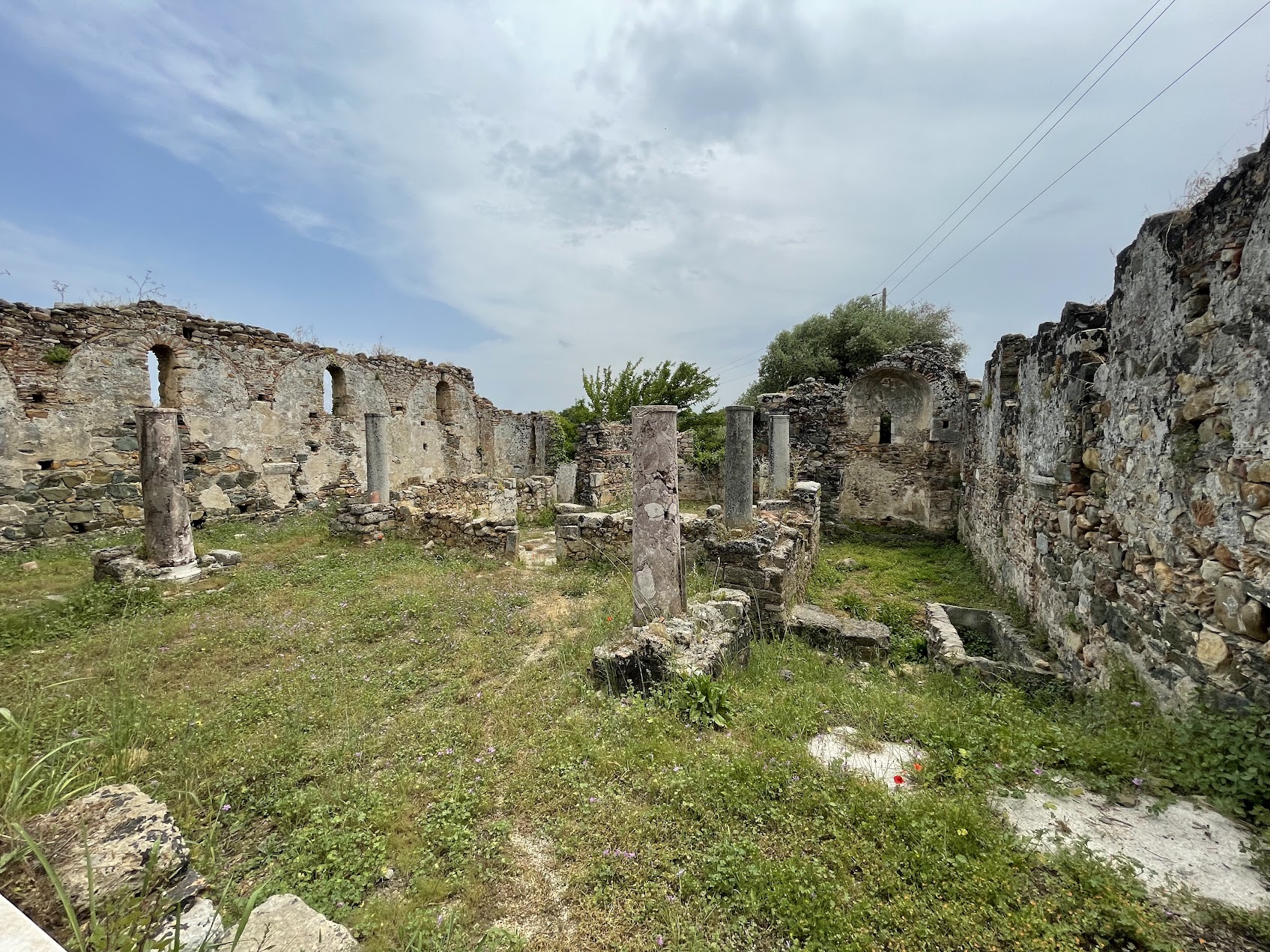
Technicznie: trójnawowa bazylika biskupia, pierwotnie kryta drewnem, z transeptem, wzniesiona w V wieku naszej ery. Poświęcona Bogurodzicy. Przez kilka stuleci katedra Episcopatus Agiensis — jednego z biskupstw organizujących życie kościelne całej zachodniej Krety i ówczesnego Apokoronasu. Dziś: ruina bez tablicy informacyjnej, bez stałej opieki konserwatorskiej, z jedną drewnianą skrzynką ochronną przy nodze kolumny jako jedynym widzialnym znakiem, że ktokolwiek tu był. Między tamtym V wiekiem a tą drewnianą skrzynką leży historia, która warta jest opowiedzenia.
Pierwsza bazylika — V wiek
Chrześcijaństwo dotarło na Kretę wcześnie. Apostoł Paweł zawinął do Dobrych Przystani podczas swojej trzeciej podróży misyjnej, a swojego ucznia Tytusa zostawił na wyspie jako pierwszego biskupa. Tradycja. Ale dobrze zakorzeniona. W V wieku wyspa miała już rozbudowaną sieć biskupstw — Gortyna, Knossos, Chersonesos, Kydonia. I właśnie w tej ostatniej diecezji, obejmującej okolice dzisiejszych Chanii, stanęła bazylika, której ruiny widzimy. Była trójnawowa, z nawą poprzeczną. Kryta drewnem — co w tamtej epoce nie oznaczało skromności, lecz funkcjonalność. Poświęcona Theotokos, Bogurodzicy. Jej skala odpowiadała randze: była to siedziba biskupa, centrum liturgiczne i administracyjne całego regionu. Z tej fazy nie przetrwało niemal nic czytelnego gołym okiem — choć Gerola, na początku XX wieku, wypatrzył w murze północnym odcinek muru wyraźnie starszego, a w połowie ścian wmurowane marmurowe konsole, które nie miały żadnego sensu w kościele drugiej epoki i musiały należeć do pierwotnej budowli. Spolia jako świadkowie — kamienie, które pamiętają więcej niż jedno wcielenie miejsca.
Arabowie i cisza — 827–961
W 827 roku na Kretę wylądowali Arabowie. Andaluzyjscy sunnici, wygnani z Kordoby, szukający nowego miejsca. Znaleźli Kretę. Przez sto trzydzieści cztery lata wyspa żyła w innym świecie. Chrześcijaństwo nie zostało wykorzenione — Arabowie nie narzucali islamizacji siłą, a kreteńscy chłopi w głębi lądu trwali przy swojej wierze — ale struktury kościelne legły w gruzach. Biskupstwa istniały tylko na papierze, jako tytuły dla duchownych rezydujących poza wyspą. Kościoły niszczyły się bez opieki albo były zamieniane na inne cele. Co stało się z bazyliką w Αγιά w tym czasie — nie wiemy. Milczenie źródeł jest tu wymowniejsze niż każda odpowiedź.
Odbudowa — 961 i lata po niej
W 961 roku Nikifor Fokas wylądował z siedemdziesięcioma pięcioma tysiącami żołnierzy i dwustu pięćdziesięcioma okrętami. Po czterech miesiącach oblężenia Chandaka arabski emirat przestał istnieć. Zaczął się drugi okres bizantyjski. Fokas wiedział, że wyspę trzeba odbudować nie tylko militarnie. Osiemnaście nowych biskupstw, nowe kościoły, nowi mnisi. Całe wsie zasiedlone weteranami i arystokratami sprowadzonymi z kontynentu. A biskupstwa — i tu jest rzecz warta zapamiętania — nie wróciły do starych siedzib na wybrzeżu. Wybrzeże było zbyt odsłonięte na ataki piratów. Siedziby przeniesiono w głąb lądu, do miejsc, które oferowały bezpieczeństwo i, co równie ważne, gotowe ruiny dawnych kościołów. Dosłownie: szukano miejsc, gdzie stały już ściany i gdzie przez wieki tlił się kult.
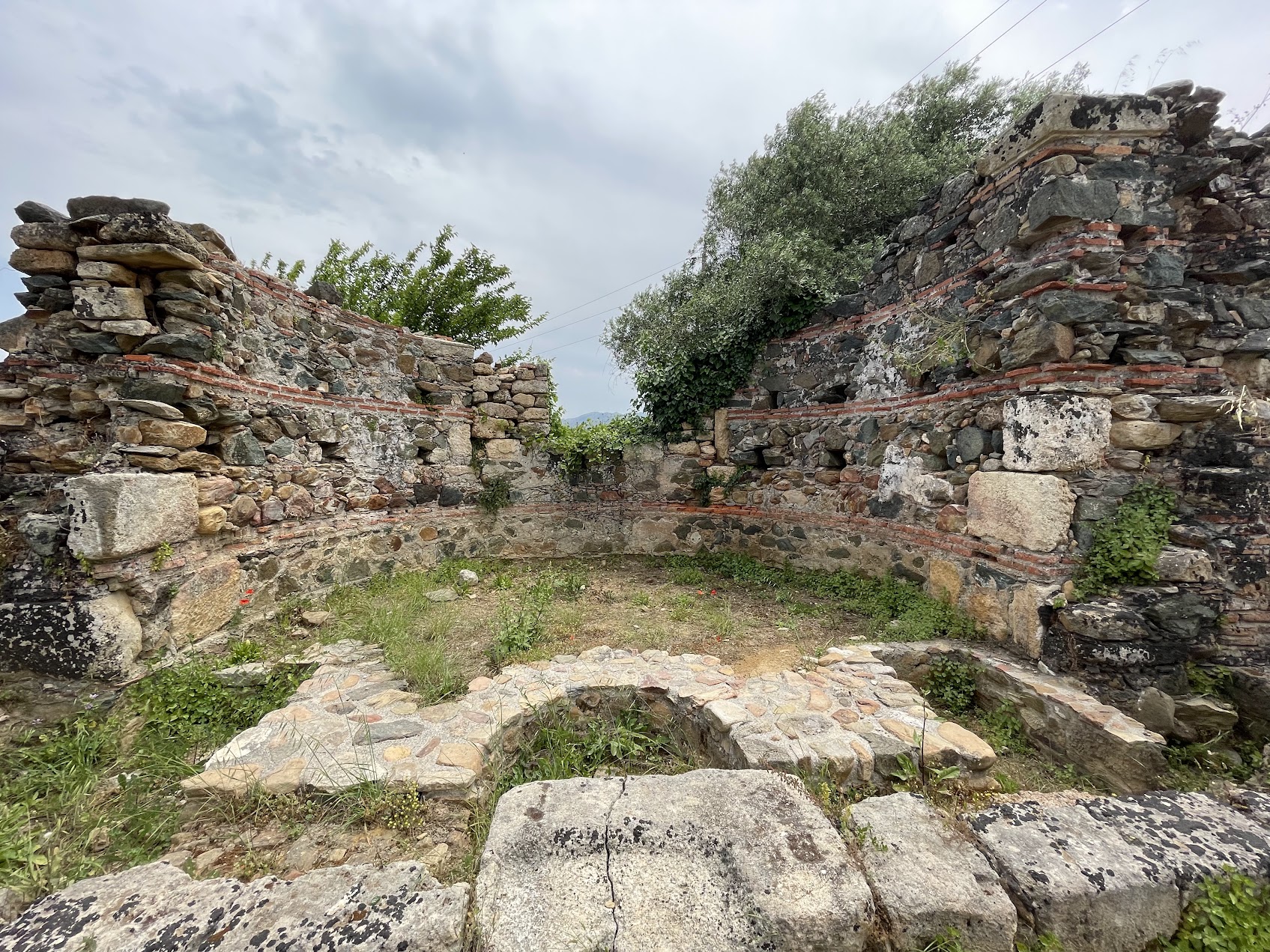
Tak biskupstwo Kydonii trafiło do Αγιά. Około roku 970 — taka jest najbardziej prawdopodobna datacja — kościół Koimisis tis Theotokou w Αγιά został odbudowany i stał się katedrą biskupią. Przez następne dwa stulecia to stąd zarządzano życiem kościelnym całego zachodniego Apokoronasu.
Co tu stało — opis przez kamień
Gerola, który odwiedził ruiny około roku 1900 i opisał je w drugim tomie swoich Monumenti Veneti nell'Isola di Creta (1908), napisał z rzadką dla siebie frustracją, że budowla zasługuje na szczegółowe badania ze względu na swoją niezwykłą wagę — ale jest zbyt zasypana ziemią, by je przeprowadzić. Sfotografował mur północny, który stał wtedy w pełnej wysokości, z czterema półkolistymi oknami w górnej partii.
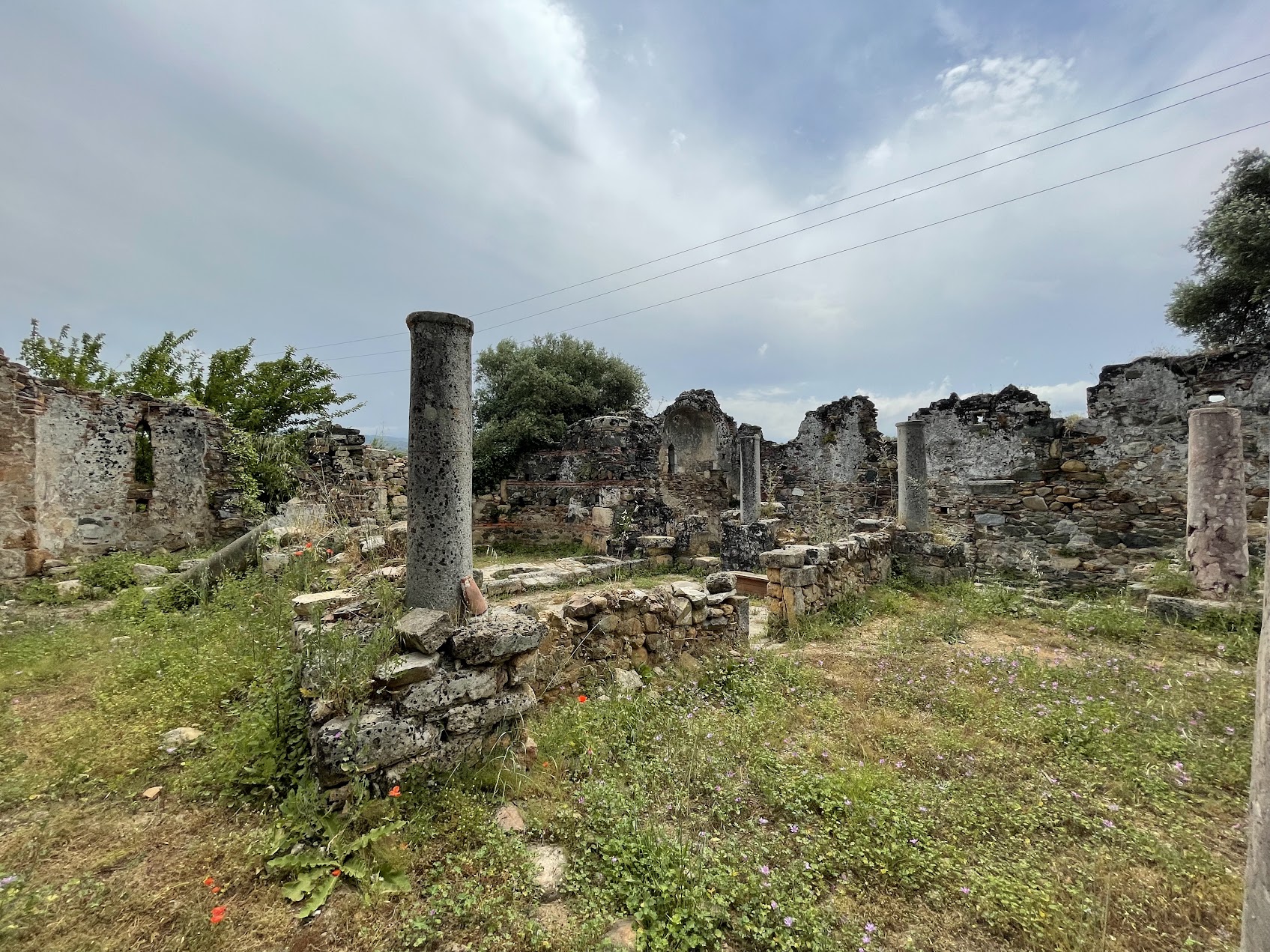
Z opisów Geroli i z tego, co dziś widać, można złożyć obraz kościoła drugiej epoki — tego z X–XI wieku. Trzy nawy. Nawa główna o sposobie przykrycia, którego nie znamy. Nawy boczne podzielone na kaplice, kryte sklepieniami krzyżowymi wspartymi na konsolach wtopionych w mury zewnętrzne i na kolumnach wydzielających przestrzeń. Kolumny — i tu jest sedno — nie były jednolite. Dwie pierwsze były z czerwonego marmuru, reszta z granitu. Wszystkie na prostokątnych bazach, których wysokość jest nieco nieregularna, bo budowniczowie musieli wyrównać różnice wysokości między trzonami. Gerola domyślił się trafnie: wzięli kolumny z ruin poprzedniego kościoła i podbili je tam, gdzie brakowało.
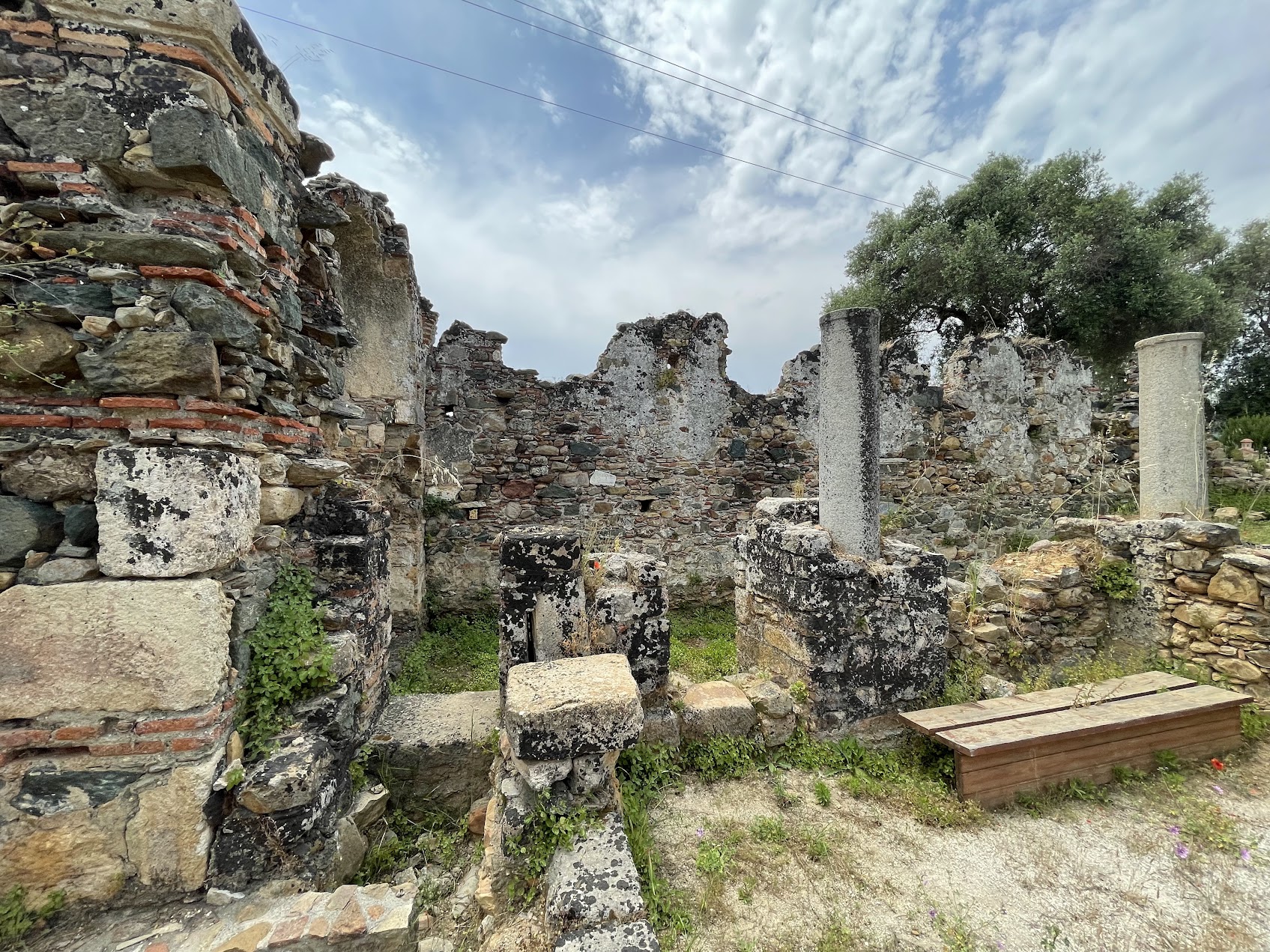
Ten czerwony marmur stoi tu do dziś.
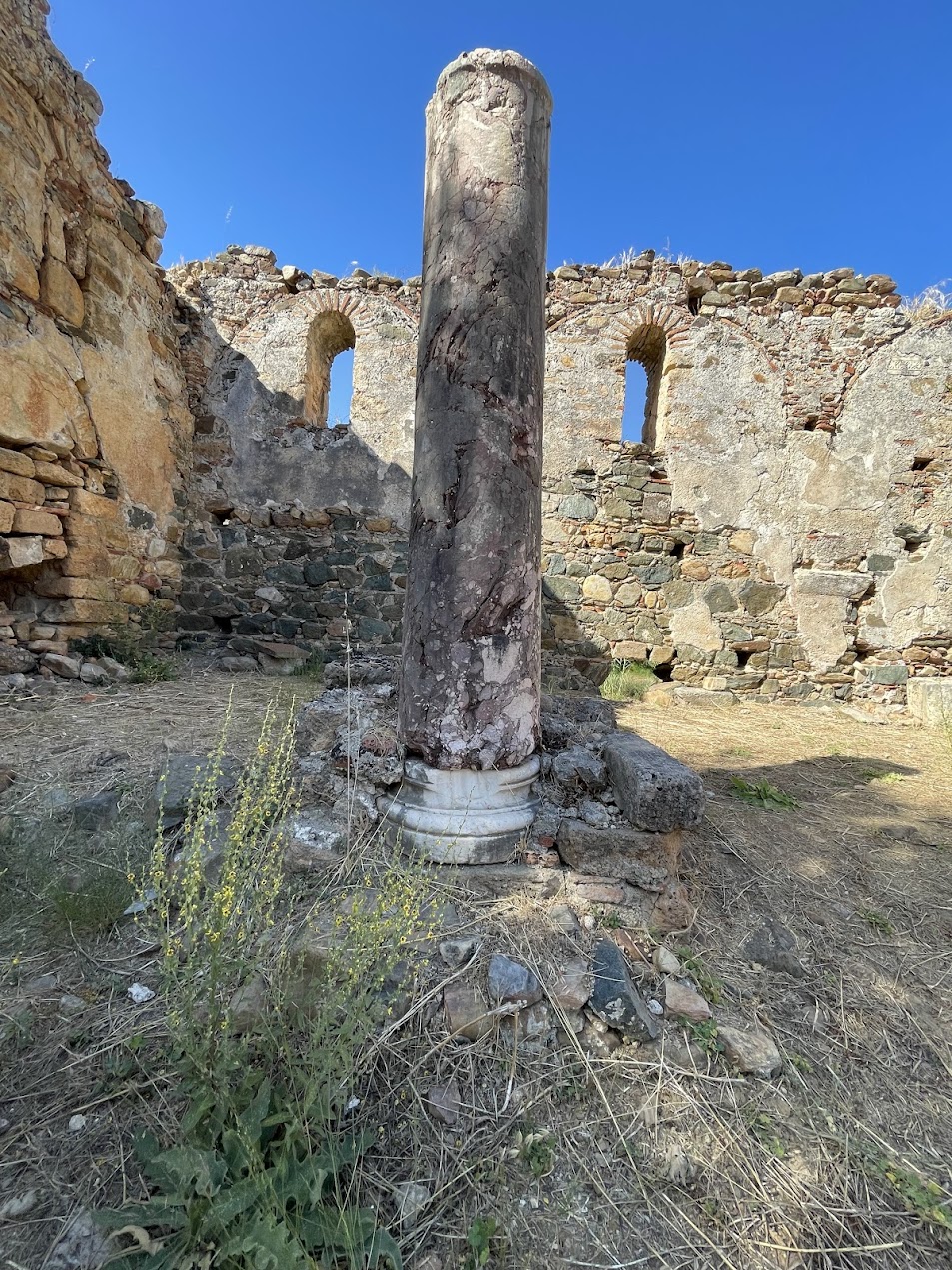
Nie pochodzi z Krety. Taki marmur — ciemnoczerwony, z białymi i różowymi żyłkami — sprowadzano z Prokonnezu, wyspy na Morzu Marmara niedaleko Konstantynopola, gdzie były jedne z najważniejszych cesarskich kamieniołomów. Kolumna przyszła tu statkiem, może jeszcze w V wieku, może jako dar cesarza dla nowej katedry na krańcach świata. Przeżyła arabskie zajęcie, przeżyła przebudowę, przeżyła Wenecjan, przeżyła opuszczenie. Stoi. Gerola ją sfotografował. Teraz ją widzisz.
Fresk
Między gruzem a murem, w jednym z zachowanych fragmentów tynku, przetrwał ślad fresku.
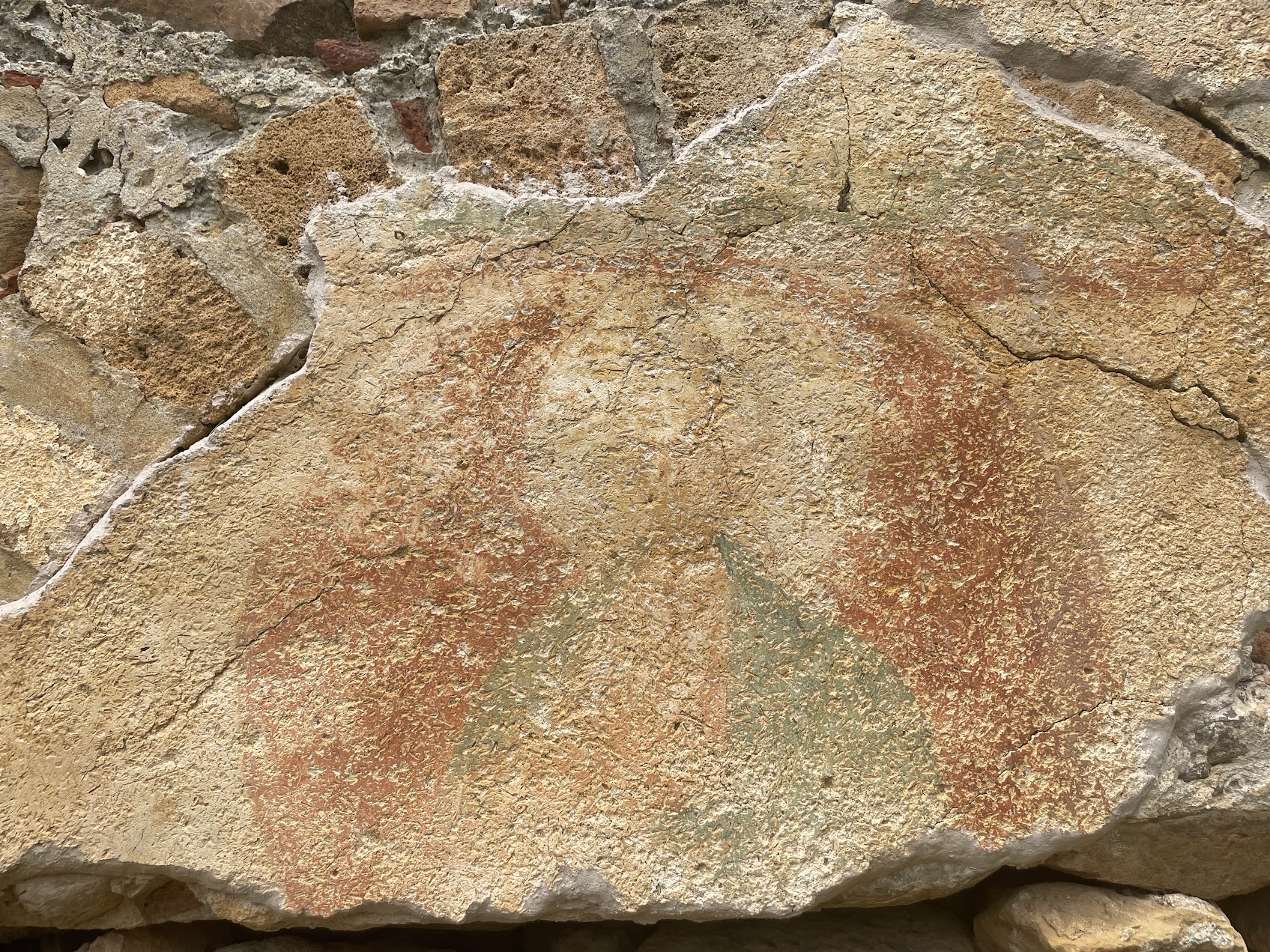
Trudno powiedzieć, co przedstawiał. Czerwień i zieleń, zarys kształtu, który mógł być szatą, albo skrzydłem, albo niczym, bo granica między figurą a przypadkowym przebarwieniem tynku jest tu cienka. Ale to jest fresk. Malowali tu ludzie, dekorowali wnętrze katedry, bo katedra na to zasługuje. Ktoś stał na rusztowaniu i kładł kolory na wilgotny tynk z wiarą, że to przetrwa.
Przetrwało. Jakimś cudem.
Wenecjanie i koniec epoki
Po 1204 roku, gdy Krzyżowcy rozbili Bizancjum, Kreta trafiła ostatecznie w ręce Wenecji. Wenecjanie nie potrzebowali prawosławnych biskupów. Zachowali strukturę diecezjalną — to było wygodne administracyjnie — ale obsadzili ją łacińskimi duchownymi. Episcopatus Agiensis stał się tytułem biskupa łacińskiego, który w dokumentach weneckich pojawia się jako episcopus Agiensis lub episcopus Agiensis de la Canea.
Już w 1252 roku, gdy Wenecjanie odbudowali i ufortyfikowali Chanię, siedziba przeniosła się tam na stałe. Kościół w Αγιά pozostał, pewnie jakiś czas jeszcze służył, ale centrum władzy kościelnej odpłynęło na północ. Bez biskupa, bez kapituły, bez środków — budowla musiała zacząć umierać.
To długie umieranie. Trwa właściwie do dziś.
Gerola i zdjęcie
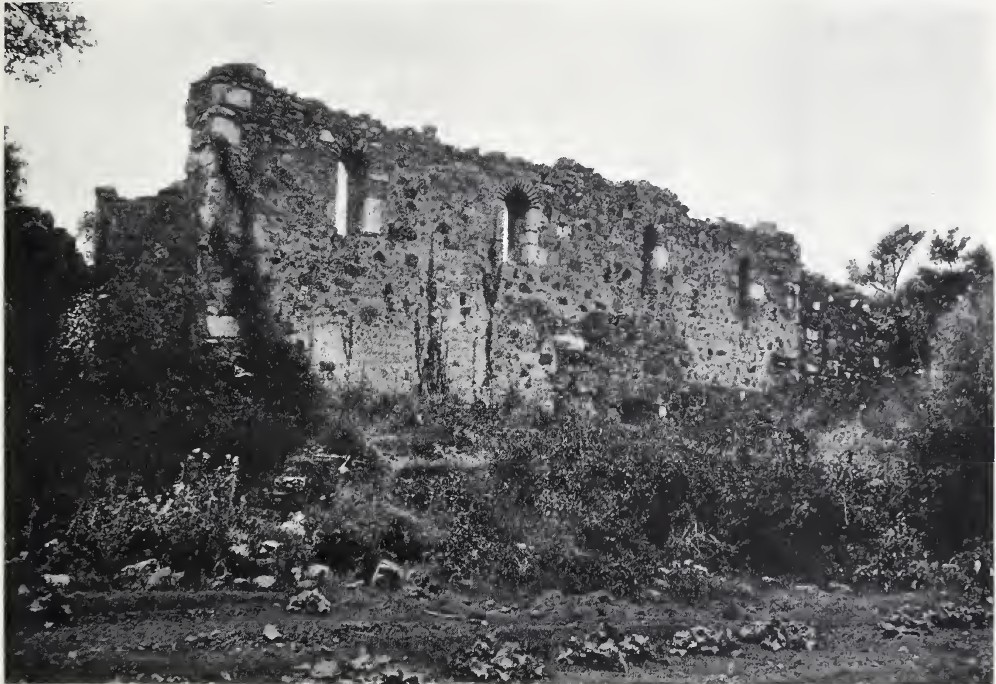
Giuseppe Gerola przyjechał na Kretę w 1900 roku. Włoski historyk sztuki, pracujący dla włoskiego rządu, który interesował się śladami weneckiej obecności na Morzu Egejskim. Jeździł od wsi do wsi, fotografował, mierzył, opisywał. Efektem są cztery tomy Monumenti Veneti nell'Isola di Creta — do dziś fundamentalne źródło dla każdego, kto zajmuje się zabytkami Krety.
W tomie drugim, w rozdziale Le cattedrali vescovili, jest kilka stron poświęconych Αγιά. Gerola widział ruiny bardziej zasypane niż dziś, ale mur północny jeszcze stał. Sfotografował go — wysoka, niemal pełna elewacja, porosła dziką roślinnością, z czterema łukowymi oknami w górnej strefie. Napisał, że stan ruin uniemożliwia dokładne badania, ale że budowla jest wyjątkowo ważna i zasługuje na więcej. Potem wyjechał.
Co tu jest dziś
Mury do wysokości 2–4 metrów, nierównomiernie. Absyda wschodnia — miejsce ołtarza — zachowana najlepiej, z wyraźnymi pasami czerwonej cegły przeplatającymi kamień. To technika budowlana zwana opus mixtum: kamień i cegła przeplatane warstwami, co dawało ścianie wytrzymałość na rozciąganie i trochę elastyczności przy osiadaniu fundamentów. Tę samą technikę stosowano w tym samym czasie w Konstantynopolu.
Kolumny — kilka granitowych i ta jedna z czerwonego marmuru — stoją nadal. Przy nodze tej ostatniej ktoś postawił drewnianą skrzynkę ochronną. To jedyna widoczna interwencja konserwatorska na miejscu.
Teren jest otwarty. Bez ogrodzenia, bez tablicy z datami, bez informacji o tym, co się tu działo przez tysiąc pięćset lat. Jeśli trafisz tu w południe w sierpniu, będziesz sam wśród cykad i ostu. Jeśli trafisz przed zachodem słońca, mury zrobią się złote i przez chwilę trudno będzie odgonić myśl o tym, jak musiało tu wyglądać, gdy wciąż stały wszystkie ściany i dzwony wzywały na nieszpory.
Wieczorami bywa tu wiatr. Wchodzi w szczeliny muru z charakterystycznym tonem — niskim, zmiennym, jakby ktoś grał na źle nastrojonym instrumencie. Gwiazdozbiory nad absydą są dokładnie takie same jak w V wieku, kiedy kładziono tu pierwsze kamienie. To jedyna rzecz, która się tu nie zmieniła.
Postscriptum: co wiadomo, czego nie wiadomo
Wiadomo, że bazylika powstała w V wieku. Wiadomo, że po arabskiej przerwie (827–961) została odbudowana około 970 roku jako siedziba Biskupstwa Kydonii, przemianowanego na Biskupstwo Αγιάς. Wiadomo, że po 1204 roku stała się siedzibą biskupa łacińskiego, a po 1252 roku siedziba przeniosła się do Chanii.
Nie wiadomo, jakie były wymiary pierwotnej bazyliki. Gerola przyznał, że ruiny były zbyt zasypane, by je zmierzyć — i stan ten nie zmienił się przez ponad sto lat. Nie ma żadnych opublikowanych wykopalisk. Nie wiadomo, czy pod trawą kryją się fundamenty, posadzka, być może mozaiki. W zachodniej Krecie znaleziono podobne obiekty z zachowanymi fragmentami mozaik — jest statystyczna szansa, że i tu coś jest. Nikt nie sprawdził.
Fundamentalnym źródłem pozostaje Gerola z 1908 roku. To mówi wszystko o stanie badań.
Gerola, Giuseppe. Monumenti Veneti nell'Isola di Creta. T. 2: Le chiese. Venezia: Istituto Veneto di Scienze, Lettere ed Arti, 1908, s. 72–73.
Ιερά Μητρόπολη Κυδωνίας και Αποκορώνου. „Α. Ιστορία της Ιεράς Μητροπόλεως Κυδωνίας και Αποκορώνου." imka.gr.