31 May 2026 · Artur Kiwa
The Cats Stayed. A Short History of an Island Someone Else Always Thought Was Theirs
On Crete, civilizations came and went. The Minoans, Mycenaeans, Romans, Venetians and Ottomans left behind palaces, walls, scripts, wars and taxes. The cats watched it all from sun-warmed walls — and stayed.
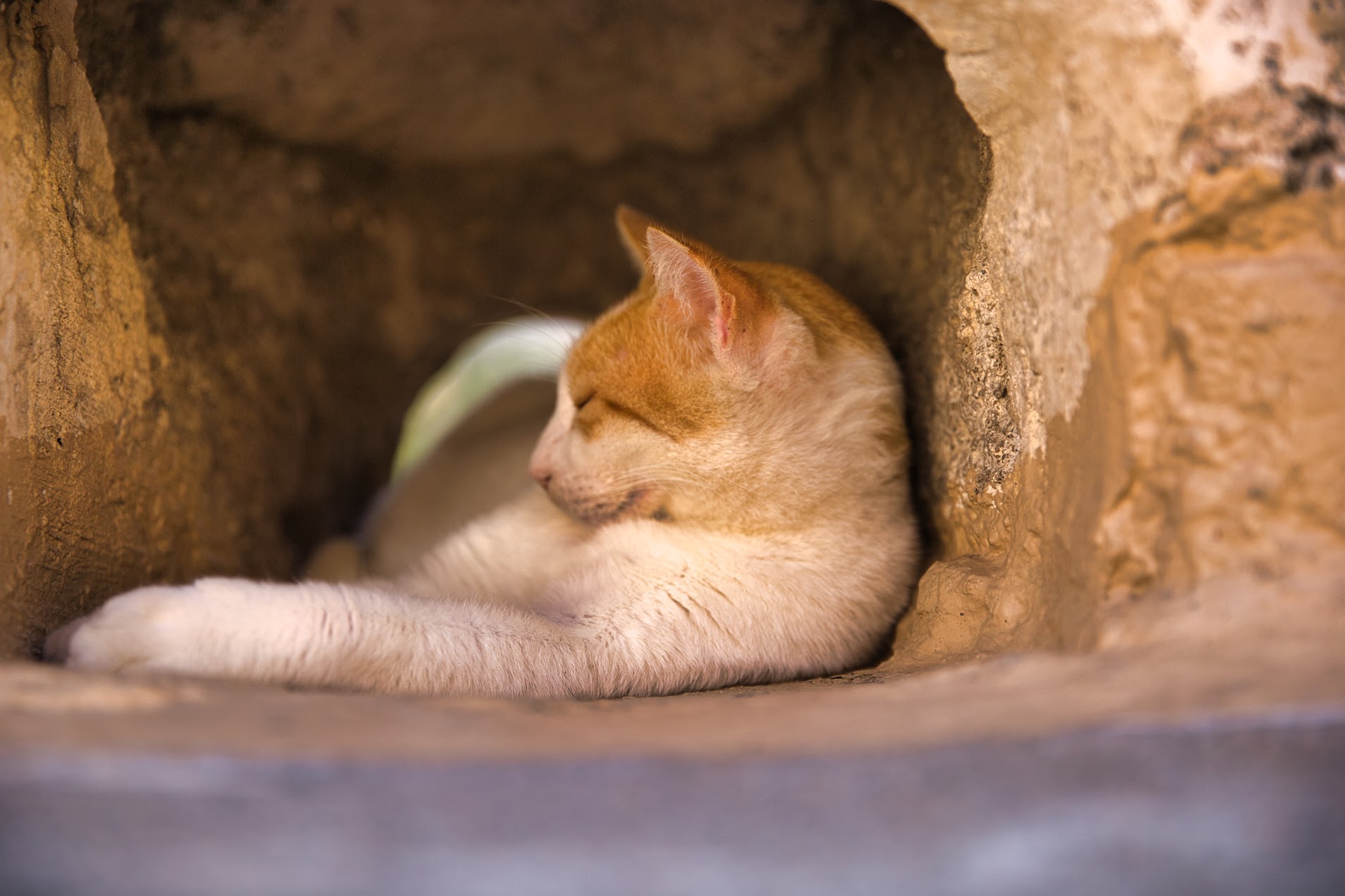
There is a certain kind of gaze on Crete that is hard not to recognize. It does not belong to a tourist looking at the ruins of Knossos. It does not belong to a guide explaining, for the hundred and seventieth time, what ritual bull-leaping was. It belongs to a cat. It lies on a sun-warmed wall, eyes half-closed, and looks at you with the expression of someone who has seen everything — truly, absolutely everything — and is no longer even slightly surprised by it.
There is no denying it. It has seen.
To understand cats on Crete, you first have to understand Crete. And to understand Crete, it helps to adopt one useful perspective: the history of this island is, at heart, a history of queues. One civilization arrives, takes its place at the counter, builds a palace, introduces a script, trades with its neighbors, and then — for reasons over which scholars still politely argue among themselves — disappears. Another one takes its place. Cats do not stand in this queue. Cats sit beside the counter and observe.
The first, at least in the part of history that can be documented in some reasonable way, were the Minoans. A Bronze Age civilization that flourished on Crete roughly from 3000 to 1100 BC, and which archaeologists call the first advanced civilization of Europe — which sounds like a compliment, but also contains the sad truth that Europe, for quite some time, was rather backward in this respect.
The Minoans built multi-storey palaces with drainage systems and flushing toilets — an invention the rest of Europe would rediscover some three thousand years later, with visible pride in itself. They traded with Egypt, the Levant and Anatolia. They created a script that has still not been deciphered, which is either one of history’s great mysteries or the most effective method of preserving privacy in the history of humankind. And they brought cats.
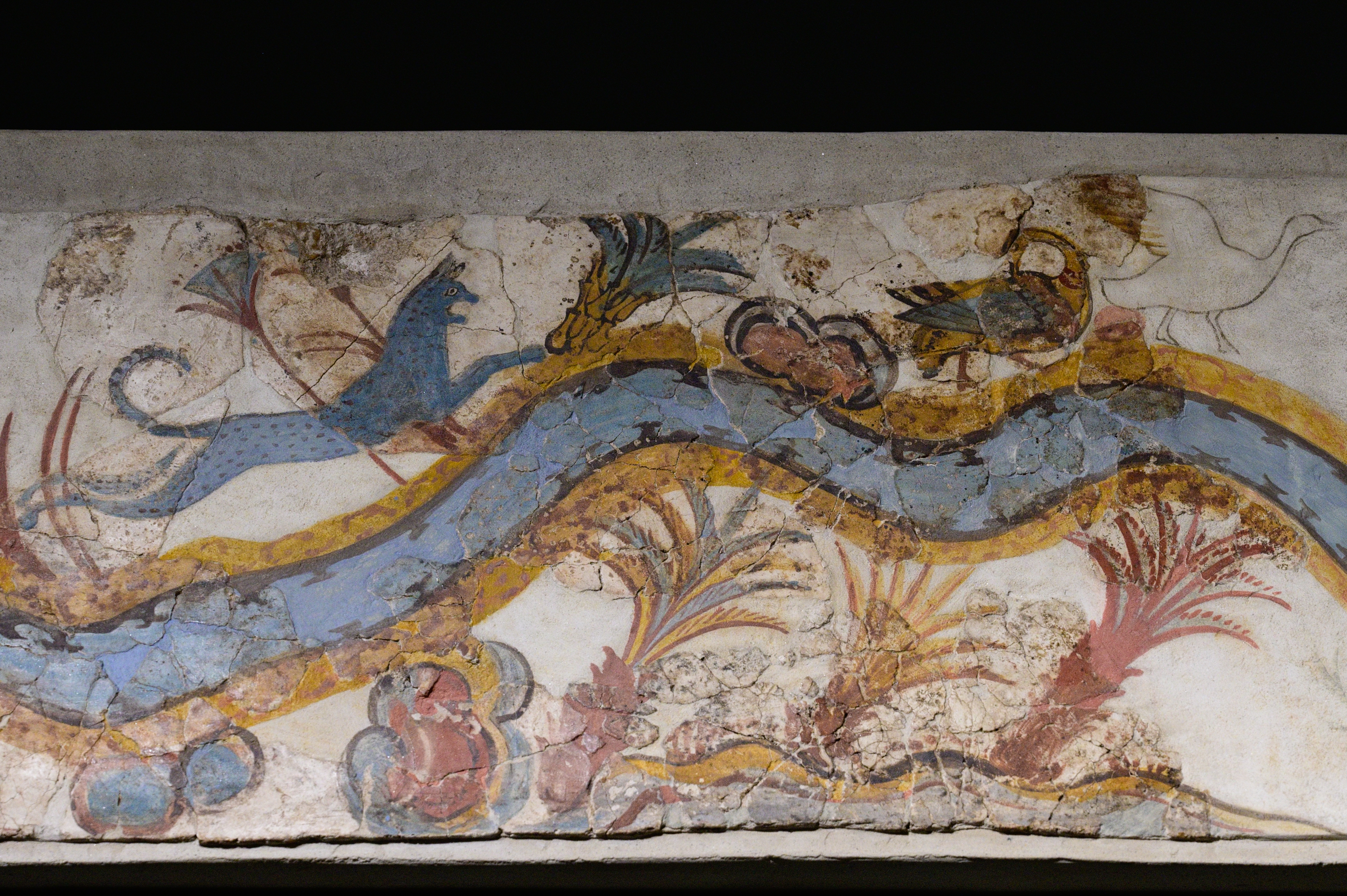
There is no certainty as to whether this was an intentional import, or whether cats simply slipped aboard a trading ship sailing from Egypt, dozed off in an empty wine amphora and woke up only in the port of Heraklion — but the presence of domestic cats on Crete is dated to around 1800–1700 BC. Interestingly, scholars tend to favor the hypothesis that the first cats were brought for a specific purpose: they helped hunt waterfowl using a method now extinct, but evidently effective in its time.
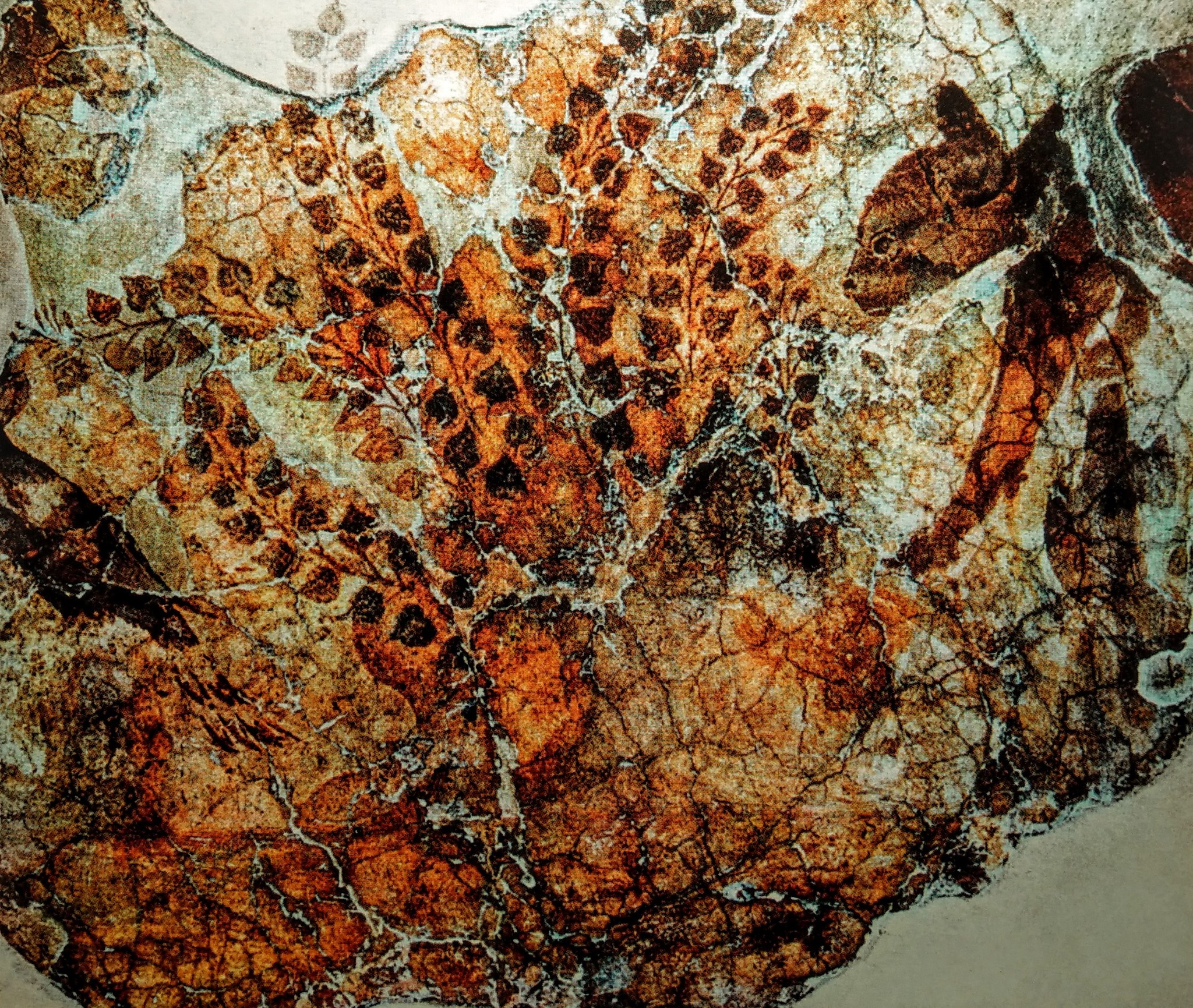
The Minoans were clearly delighted with them. On ivory seals they carved cats chasing ducks. In the palace at Malia they placed their images on cups and jugs. In a fresco from Knossos, a cat hunts birds with the expression of someone treating it as pleasure rather than duty. In the palace of Hagia Triada, another feline hunter creeps up on a pheasant with the clear intention that this encounter will not end well — for the pheasant.
But the strangest fact is that the Minoans pressed the cat into their own writing. In Cretan hieroglyphic — the oldest system of signs preserved on Crete — one of the signs is a clear depiction of a feline head. The cat entered writing. It literally became a sign.
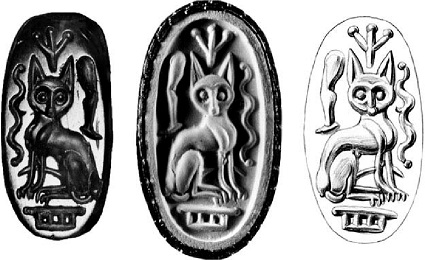
It is hard not to see in this a certain prophetic accuracy. The cat as a sign. The cat as a symbol. The cat as something that would outlast the civilization that created it.
The Minoans disappeared. The Mycenaeans came. The Mycenaeans were more warlike, less subtle in their art, but very efficient at taking over other people’s achievements and calling them their own — a tradition that would have a long and fruitful future in human history. They took over Crete, took over the trade routes, took over elements of Minoan culture. They did not have to take over the cats, because the cats were already there and had no intention of leaving.
The Mycenaeans disappeared too. For a while, during the so-called Dark Ages, there was generally less of everything on Crete: fewer palaces, less trade, less writing, fewer historical sources. Probably fewer cats as well — but cats have one advantage over civilizations: they do not need bureaucracy, supplies of raw materials or a stable political system in order to survive.
Then came Classical Greece, Hellenistic Greece, and then Rome. Rome is a special case here, because the Romans, unlike many other invaders, had an attitude toward cats that was… official. They valued them as defenders of granaries against rodents. At one point, cats in Rome were protected by law. This is one of the few cases in antiquity where an animal acquired legislation concerning itself — which, if you think about it for a moment, is exactly what a cat would want, if it could be bothered to want anything from human law at all.
Under Rome, Crete became a peaceful province. No great battles, no dramatic transformations. Olives, wine, sheep. And cats — by then fully at home, sitting on thresholds, warming themselves on boundary walls, sleeping in ports. Rome fell. The cats stayed.
Next in the queue was Byzantium. Then the Arab raids, then — and this is where history becomes truly complicated — Venice.
The Venetians bought Crete in 1204 from Boniface of Montferrat, who had received it from the crusaders, who in turn had a rather murky legal title to the island in the first place. It was the sort of transaction that lawyers today would probably describe as “legally creative.” The Venetians, however, wasted no time on scruples and immediately set about exploiting the island with their characteristic efficiency.
They ruled for four and a half centuries. That is a long time. They built fortifications that still stand today. They introduced an administrative system whose traces can still be seen. They created the conditions for the flourishing of Cretan culture — it was under Venetian rule that icon painting thrived, El Greco left the island as a young man and went off to make a career elsewhere, and Erotokritos — the romantic epic by Vitsentzos Kornaros — became one of the most important works of modern literature in Greek.
Cats sat on Venetian walls exactly as they had once sat on Minoan walls. A change of power does not make any particular impression on a cat.
In 1669, after twenty-four years of siege — one of the longest in early modern European history — Venice surrendered Crete to the Ottoman Empire. Twenty-four years of siege. For comparison: the Second World War lasted six.
The Ottomans ruled Crete until 1898. Then came uprisings, autonomy, union with Greece in 1913, the dramatic Battle of Crete in 1941, German occupation, liberation, reconstruction and tourism. At every stage of this history, in every town, by every port and every taverna: cats.
There is a certain lesson in this, one the cat delivers without words, because a cat never uses words when a look will do. Civilizations collapse for reasons historians can analyze for years: fiscal overload, climate change, external pressure, internal erosion of institutions, epidemics, volcanic disasters. Every age has its own set of reasons and its own set of convictions that this time it will be different, that this time something more durable, wiser and better planned has been built.
A cat does not plan. A cat adapts. A cat does not build civilizations, because it instinctively senses — or simply does not bother itself with the matter — that civilizations are institutions with a distinctly limited time horizon. But a cat knows perfectly well where the warmest stone is at any given moment. Where fish appears at dawn. At which taverna table tourists leave uneaten scraps. An ancient strategy of survival, easily mistaken for stupidity.
I am sitting at a taverna somewhere between Chania and Rethymno. On the table beside me lies a guidebook to some Cretan “must see,” which I read halfway through and then put aside, because the heat proved stronger than my literary ambitions. A cat jumps onto the wall by the terrace — ginger, with a slightly ragged ear, wearing the absolute confidence of someone who has never paid rent in his life and has no intention of starting.
We look at each other for a moment.
He was here before every tax system, before every peace treaty, before every revolution and restoration of power. He was here when someone painted a fresco of a cat hunting birds and did not know that three hundred years later the palace would burn, and another three thousand years after that some archaeologist would uncover a fragment of plaster and write a scholarly article about it. The Minoans, Mycenaeans, Romans, Venetians and Ottomans came and went. The cats stayed.
The ginger cat jumps onto the table, sniffs my plate and walks away with the disdain of someone who had better offers.
He is right. He certainly did.