1 June 2026 · Artur Kiwa
Τάματα. Application Forms to Heaven
In forgotten chapels of Crete, beside icons and candles, hang silver plaques, children’s shoes, crutches and walking sticks. These are not decorations. They are material traces of requests, fears, gratitude and hope — small application forms addressed to heaven.
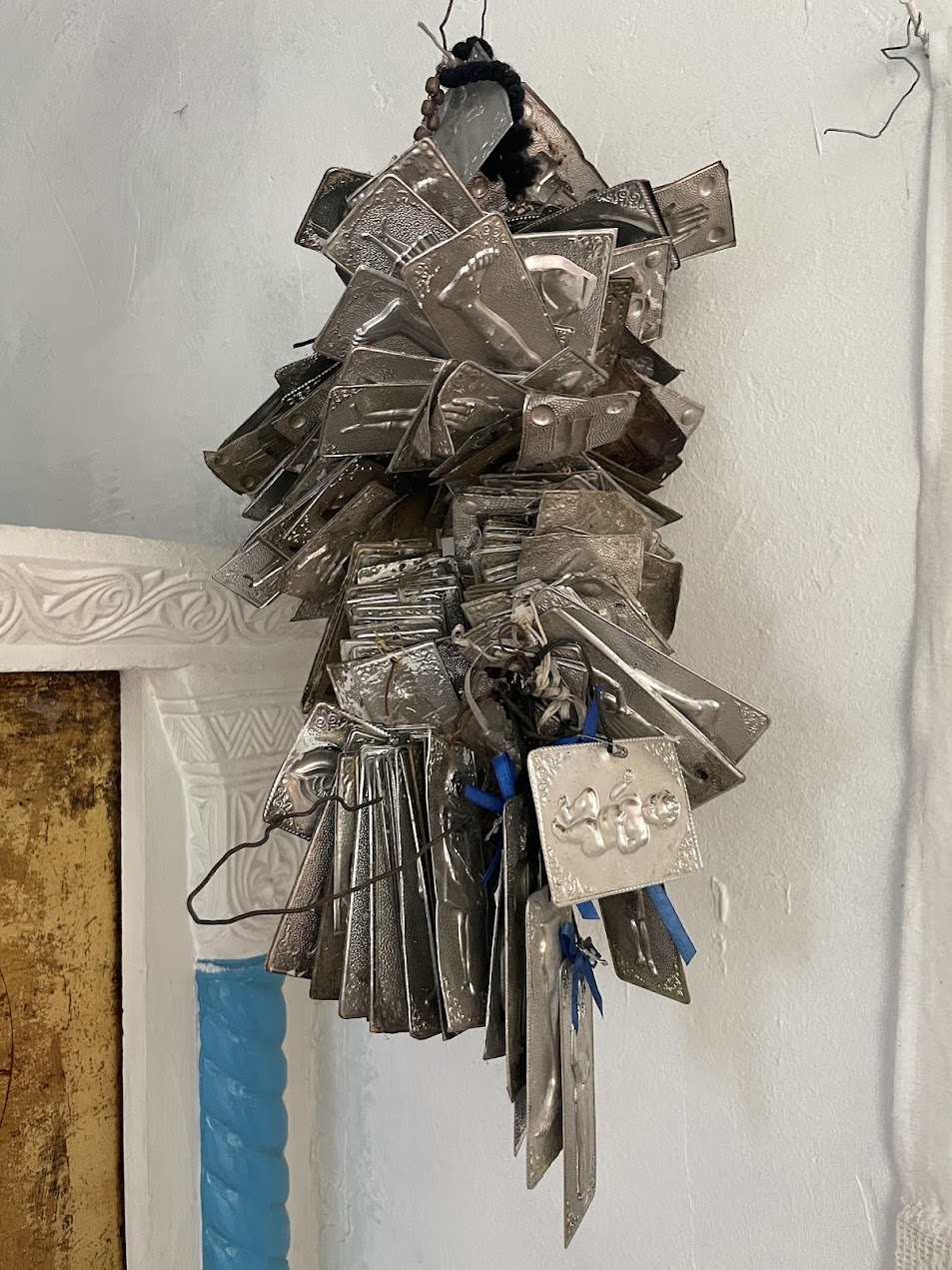
Many times I have written that Crete has taught me something. Not only about the island, its difficult history, and the people who live there. Above all, about myself. Several times I have been confronted with physical weakness — that much is obvious, mountains do not forgive certain illusions about one’s own fitness. But there have also been quieter confrontations: with weakness of spirit, with the blurred line between what I know and what I only think I understand.
I know that I run around old churches like, for want of a better phrase, a deranged neophyte. It is a paradox I can see myself: an agnostic chasing chapels, studying the Torah, analyzing the meanders of Eastern iconography, searching in these places for something I prefer not to name too precisely, so as not to compromise either myself or the thing being sought.
This time, not about frescoes — how much can one take, right? This time about details hidden in corners. About things tourist catalogues do not display and nobody photographs with Instagram in mind, because they do not fit neatly into a frame and do not have one pretty color. This time about τάματα — votive plaques.
You will see them in great churches in Heraklion, Chania, Rethymno: gold, silver, locked behind glass, catching the eye with their shine, protected like exhibits. You will also see them in rural churches forgotten by God and man — tied in bunches, crammed into corners, covered in cobwebs and dust. A living chronicle of human desires. What remains when there is no longer anyone who remembers what was being asked for.
My first encounter with this phenomenon had nothing mystical about it. I saw them, became curious, read a little. That was all. No emotion, no revelation. What tamata really are — what they mean to the people of Crete, what weight they carry as a practice, not as decoration — I learned much later. It was part of what I call my Cretan maturation: understanding the island not as a background, but as a context.
From Asclepius to a Village Chapel
The tradition of offering votive gifts has a very long history in the Mediterranean world, reaching back to the Aegean world, archaic Greece and classical Greece. Worshippers placed votive offerings — ἀναθήματα — in sanctuaries in gratitude for rescue, healing or the fulfillment of a request. In the temples of Asclepius, stone and terracotta representations of body parts have been found: legs, hands, eyes — offered after recovery. Votive plaques and miniature models of organs have been discovered, among other places, in sanctuaries at Epidaurus and Corinth. The religious mechanism was clear: the gift as material confirmation of a relationship with the deity.
In the Hellenistic and Roman periods, this practice did not disappear, but also developed into the form of thin metal plaques with relief decoration, hung in temples. At the same time, the Latin ex voto functioned — literally “from a vow” — which captures the essence of the phenomenon well: the gift was the fulfillment of a promise made in the face of danger.
Christianity did not abolish this practice. It transformed it. Already in late antiquity, believers placed votive gifts at the tombs of martyrs and in churches — lamps, plaques, thanksgiving inscriptions. Early Christian synods sometimes regulated this practice, but they did not ban it, because it was too deeply rooted in popular devotion for fighting it to make sense. In the Byzantine world, metal plaques with images of body parts or scenes connected with answered prayer became widespread — the direct ancestor of today’s tamata.
The tradition therefore has the character of transformed continuity: from ancient anathemata in Greek sanctuaries, through Roman ex voto, to Byzantine and modern Christian forms. The theological context changed — the old deities were replaced by Christ, the Mother of God and the saints — but the religious structure itself remained recognizable: vow, request, fulfillment of the promise through a material gift. On Crete, this line has remained exceptionally strong. The Venetians did not break it. The Ottomans did not break it. Languages, rulers, borders and doctrinal frameworks changed, but the need to leave a material trace of request or gratitude remained.
On the island, people have always believed that a saint can deal with very practical matters. Here, prayers were not raised only for world peace. Here, people prayed for rain. For healing of the eyes. For a broken leg to knit back together. For health, crops, a safe return from the sea. Human worries have been the same for centuries — and the saints answered these simple requests. And when they helped, something was left behind as a keepsake. A walking stick. A crutch. A plaque.
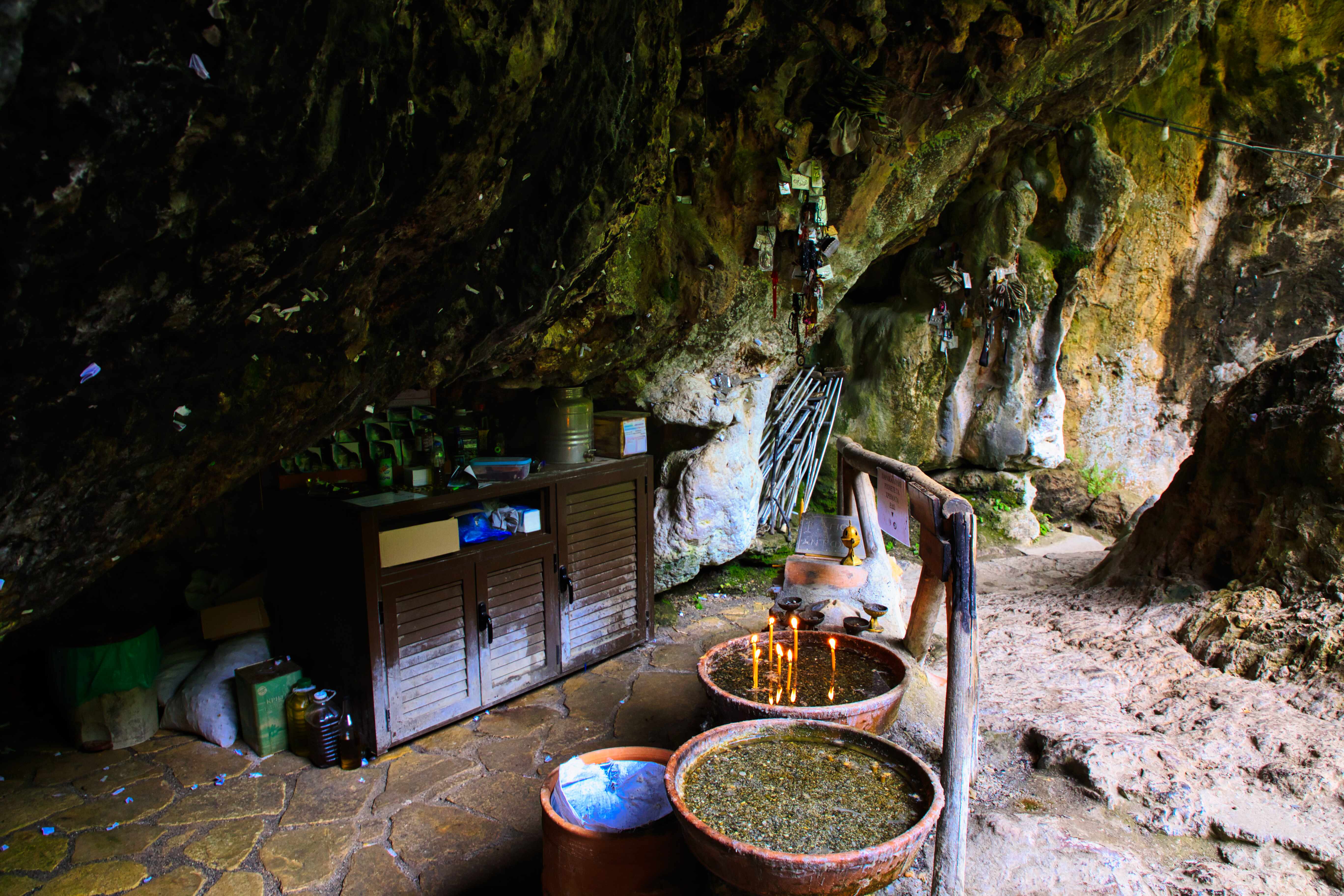
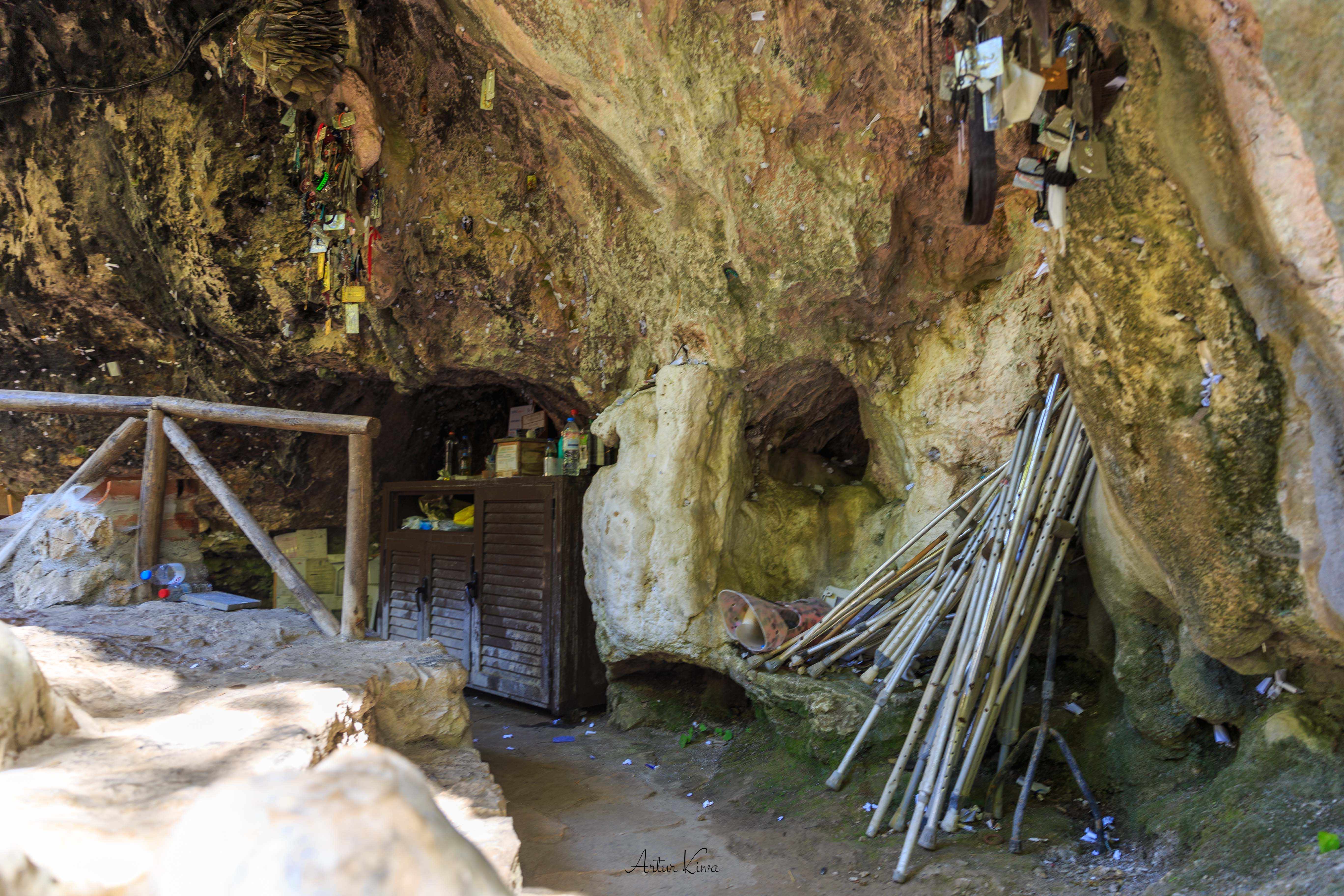
Enter the chapel in Patsos, Agios Antonios, and you understand immediately: this is no “temple of Byzantine art.” This is a warehouse of human hope. There, under the rock, in the cave, stand dozens of crutches — the kind used after fractures, for walking. Someone came on crutches, prayed, recovered and left their support behind as proof. As if they wanted to say: Saint Anthony, thank you, I don’t need this anymore, take it as a keepsake. And so it accumulated: one person left a crutch, another a walking stick, a third a piece of plaster from a broken arm. A museum of folk orthopedics came into being.
Silver plaques are the more elegant version. You see an eye, a leg, a heart, a child. This is an application form to heaven: please repair this part of the body, or protect this child. Brief, concise, iconic. But sometimes a little piece of silver was not enough. Instead of a plaque — a child’s shoe. A bib. A sock. Or the shoe of an adult sailor who wanted the saint to watch over his journey at sea. Such a votive offering was even more personal: everyone knew that the saint would look and immediately understand who it was about.
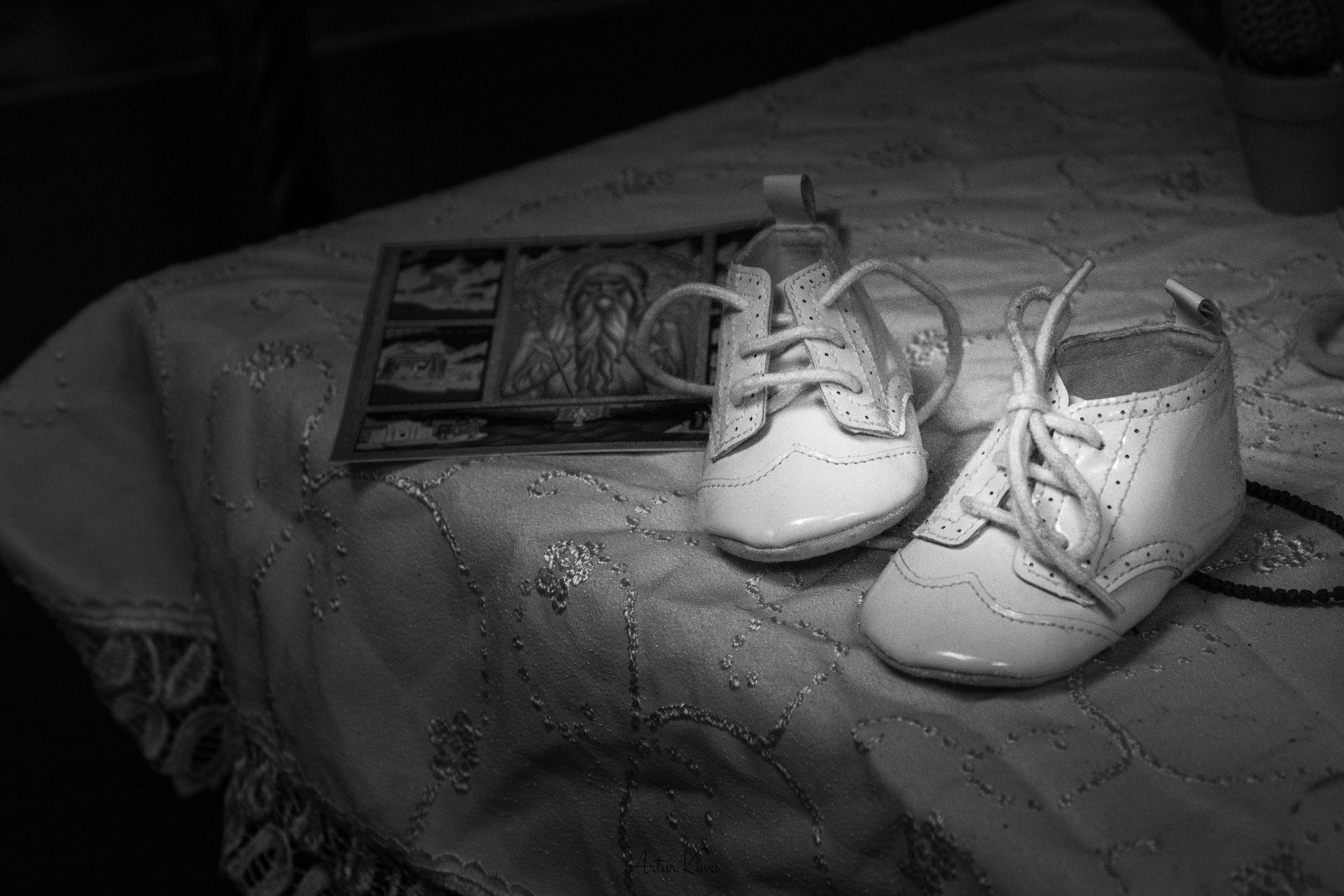
Today we look at this with a smile — a shoe under an icon, a bib beside the Mother of God, a crutch leaning against an iconostasis, a little like a lost-and-found office. But for the people who left these things, it was a matter of life and death. When there was no doctor. When the sea took fishermen. When a child was ill and nothing was certain, and there was nothing to lose.
And this is where it strikes me — me, an agnostic with a library, with notes, with the habit of looking for explanations everywhere except in the sphere of faith.
We look at frescoes as works of art. We study technique, iconography, provenance, dates. We place them within the frameworks of history and aesthetics. But tamata cannot be forced into any frame. They are not works of art. They are signatures. The signature of a simple person beneath their own fate. I, Nikos from Patsos, came here on crutches, and I leave on my own feet. Saint Anthony, remember me.
When I stand in such a chapel and look at the silver plaques, children’s shoes and crutches, I have the impression that this book of Crete, the one I keep talking about, is writing itself. Every person leaves one letter in it. And suddenly all this history — from centuries ago and from today — arranges itself into one sentence: faith is not only dogmas and great theological treatises. It is the everyday, very concrete struggle for health, for children, for returning from the sea.
That is why I like precisely these chapels most. Because there the saints do not hang in golden frames behind glass. There they are among people. With a silver heart, a scratched-out eye and a crutch propped against the wall.
You can touch them. Not mystically — physically.
And perhaps that is exactly the point. That three thousand years of practice — from terracotta legs in the temples of Asclepius to a little shoe beside an icon in a forgotten church under the rock — is not only the persistence of tradition. It is the persistence of need. The same, unchanged need for someone to hear. To leave a trace. To say: I was here, I was afraid, I asked.
Sources and Further Reading
Hughes, Jessica. Votive Body Parts in Greek and Roman Religion. Cambridge: Cambridge University Press, 2017.
Vikan, Gary. Byzantine Pilgrimage Art. Washington, DC: Dumbarton Oaks, 1982.