From the field
Blog
Field notes and essays on the churches of Crete: their frescoes, painters, inscriptions and the people around them.
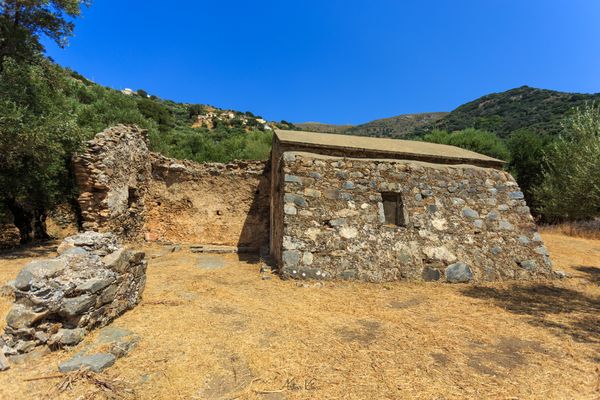
Agios Georgios of Vaïdiana, or Who Was Really Here First
Half a century before Pagomenos, someone was already painting here — no name, no fame, working for a monk who just wanted his own little church. I waited ten years to see it with my own eyes.
In the catalogue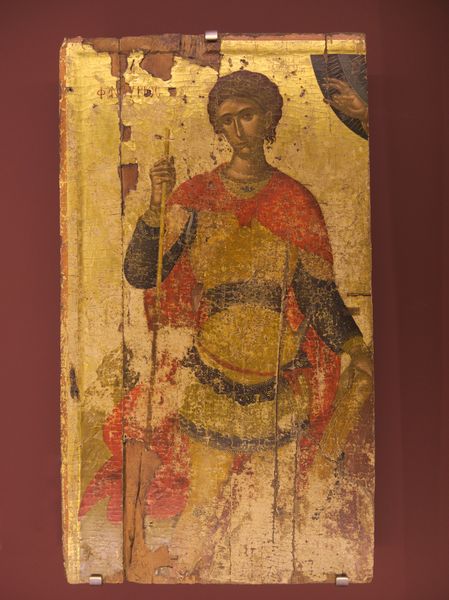
The Saint of Lost Things. Fanourios, His Mother, and a Slice of Cretan Cake.
When a true Cretan loses something, he doesn't start by checking the lost property office or posting in a local Facebook group. A true Cretan heads straight to the kitchen and starts baking a cake, a *fanouropita*. What on earth does a cake have to do with a missing sheep or a lost key? Why a cake, of all things, and where did this strange custom come from?
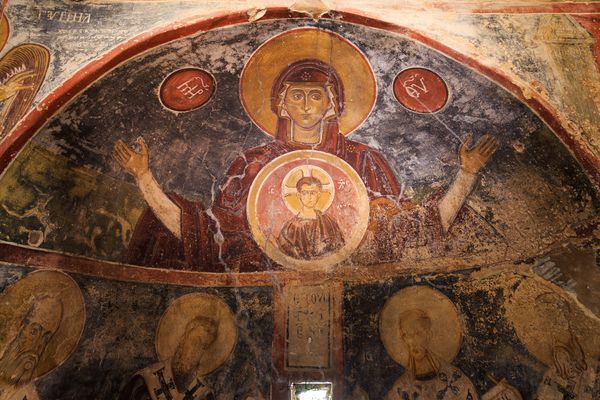
A Beardless Christ, or the Theology of a Face
One name, two languages, and a translation that changed the course of theology — before anyone had even picked up a brush.
In the catalogue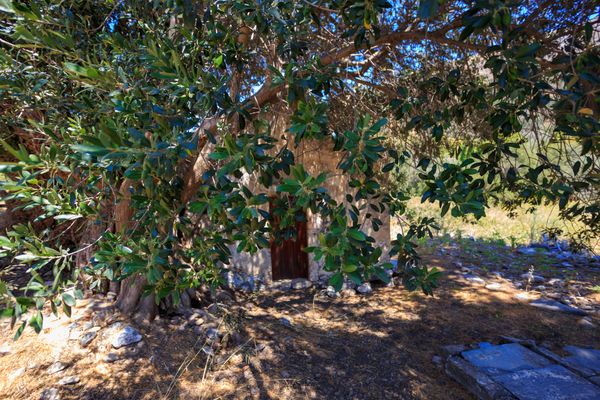
Archangel Michael of Kouneni, or Father, Son, and Half a Millennium of Silent Inscription
Hidden in the undergrowth, as if it still had something to hide. In the first half of the 14th century, two painters left their signature here. It took seven centuries for the content of that inscription to see the light of day again.
In the catalogue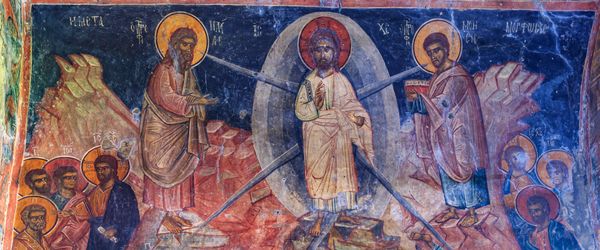
The Icon of the Transfiguration of Christ
There is a moment when looking at an old fresco when the eye already knows more than the mind has managed to name. At first, all you see is an oval — bright, blazing, unmistakably central — and a figure in white standing within it so calmly, as though standing in the middle of an explosion of light were the most natural thing in the world. Only after a moment does recognition come: this is not one scene but three scenes at once, played out on the same wall, by the same brush, among the same figures — only at three different moments in time, which the painter, without the slightest hesitation, has folded into a single image.
The Church Behind My Back
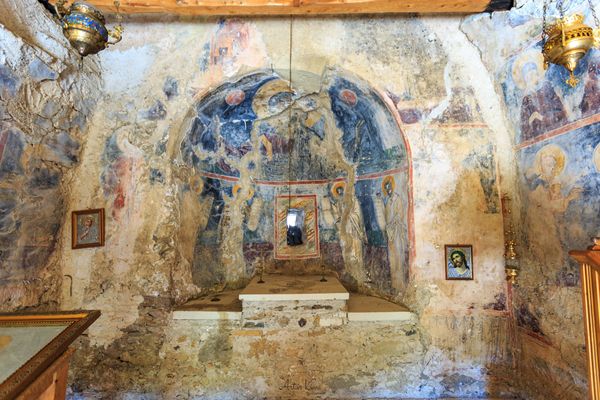
Just a dozen or so metres from my bed, the little church of Agios Athanasios has stood there for years — with hell labelled like a road sign, sinners bitten by snakes, and Ossia Maria, after whom the Samaria Gorge takes its name.
In the catalogue
The Stranger. Eight Foundations That Left Their Mark on Crete
The story of a saint who did not build churches and did not perform miracles. He built communities that survived for a thousand years.
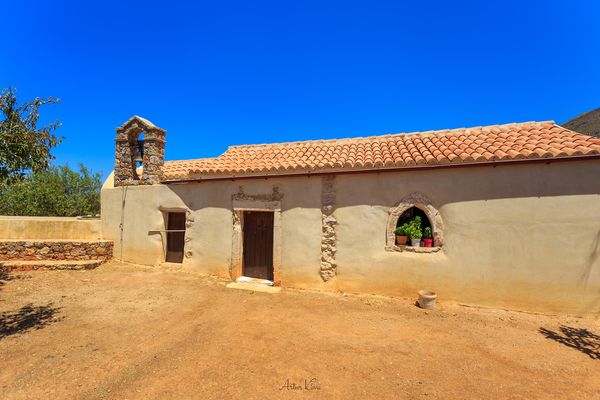
A Wall Full of Names. The Monastery of Saints Peter and Paul at Cape Spatha
For nearly a hundred years, sailors, merchants and officials carved their names into the plaster of this church. Sixty-six inscriptions between 1514 and 1608. A document of movement, not of piety.
In the catalogue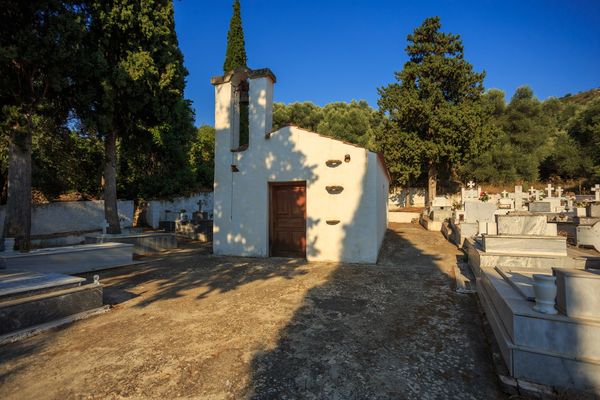
Fourteen Faces from Kavallariana
In 1327, four families from a mountain village in Selino built a church, hired a painter, and carved into stone a sentence no one before them had dared to write. Seven hundred years later, their faces are still on the wall.
In the catalogue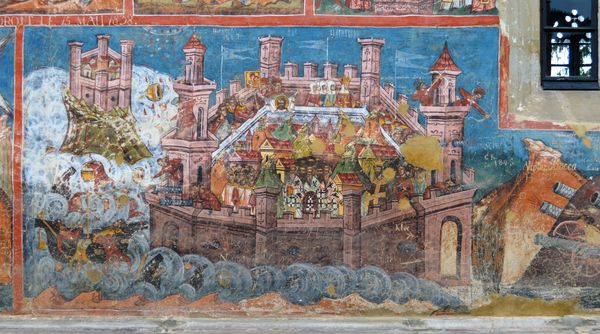
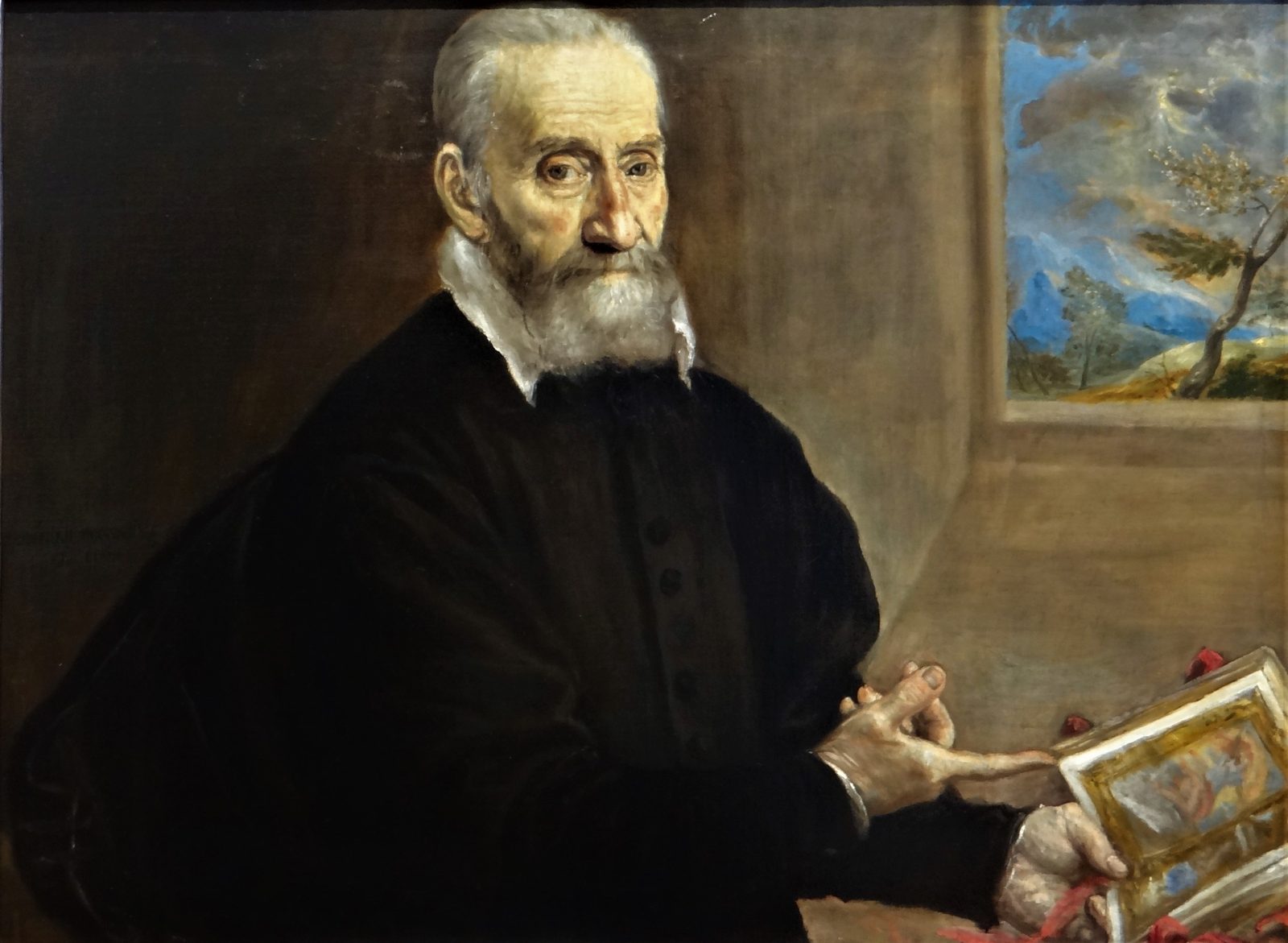
When Constantinople Fell, Crete Rose
On 29 May 1453, Constantinople fell. For many, it marked the end of the Byzantine world. For Crete, it became the beginning of an extraordinary age of artistic, intellectual and spiritual flourishing.
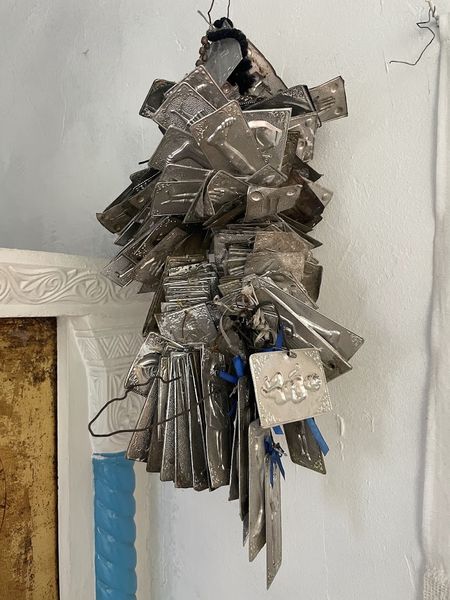
Τάματα. Application Forms to Heaven
In forgotten chapels of Crete, beside icons and candles, hang silver plaques, children’s shoes, crutches and walking sticks. These are not decorations. They are material traces of requests, fears, gratitude and hope — small application forms addressed to heaven.
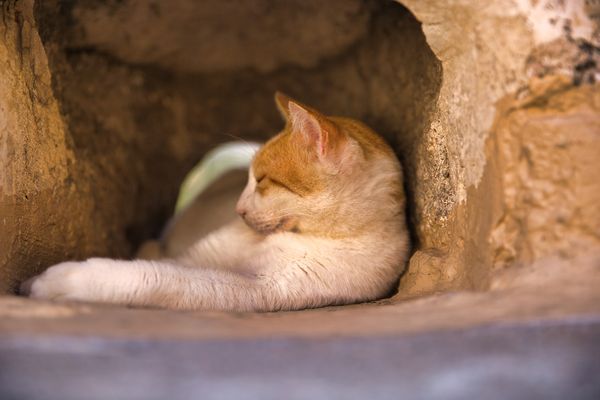
The Cats Stayed. A Short History of an Island Someone Else Always Thought Was Theirs
On Crete, civilizations came and went. The Minoans, Mycenaeans, Romans, Venetians and Ottomans left behind palaces, walls, scripts, wars and taxes. The cats watched it all from sun-warmed walls — and stayed.