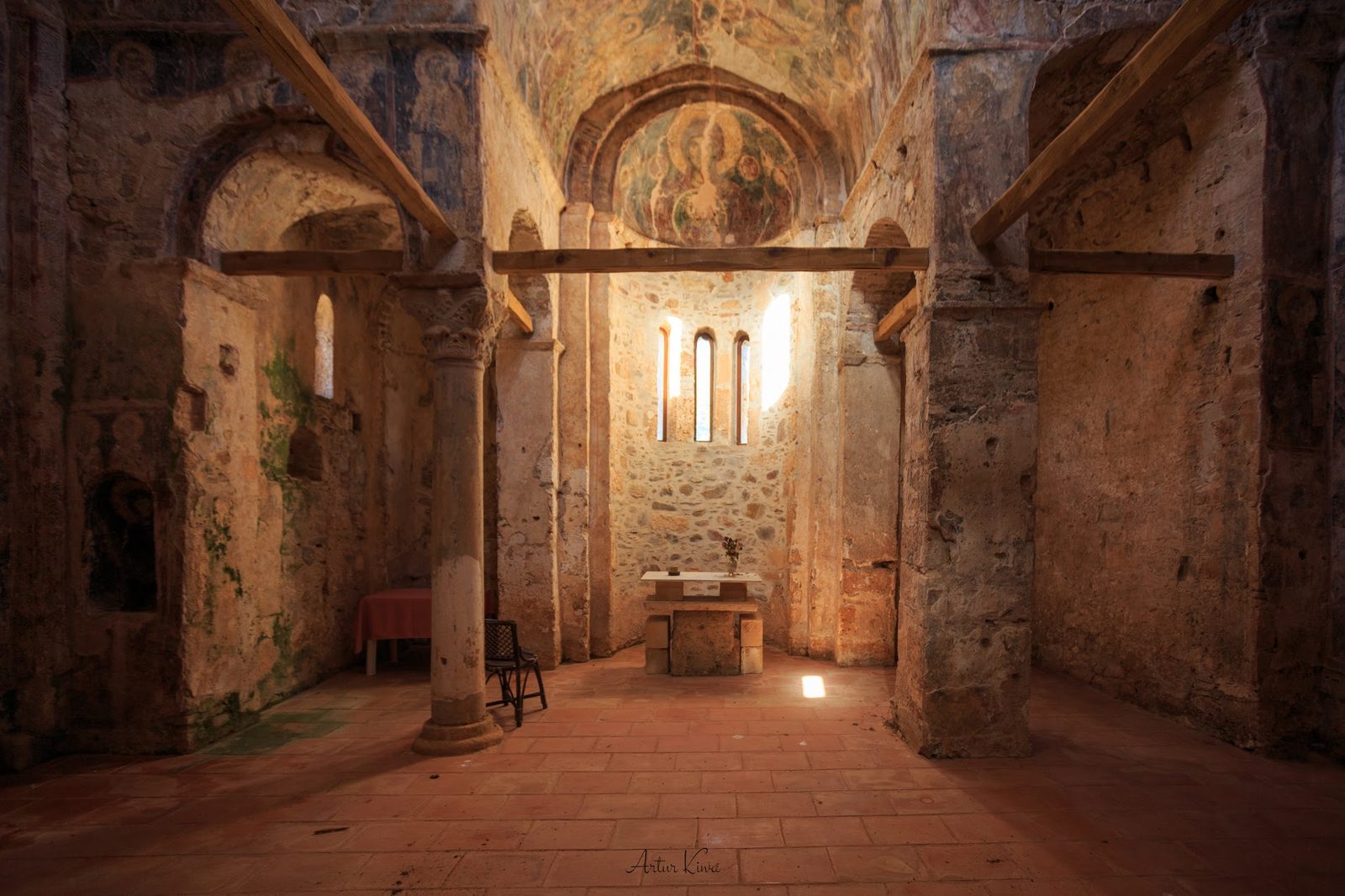
The Stranger. Eight Foundations That Left Their Mark on Crete
The story of a saint who did not build churches and did not perform miracles. He built communities that survived for a thousand years.
Read
Field notes and essays on the churches of Crete: their frescoes, painters, inscriptions and the people around them.
Tag: history · clear filter
The story of a saint who did not build churches and did not perform miracles. He built communities that survived for a thousand years.
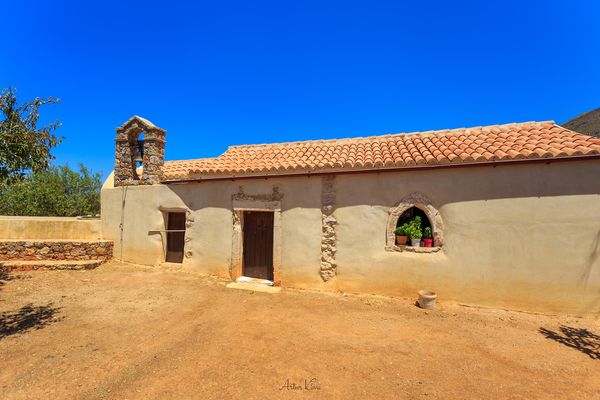
For nearly a hundred years, sailors, merchants and officials carved their names into the plaster of this church. Sixty-six inscriptions between 1514 and 1608. A document of movement, not of piety.
In the catalogue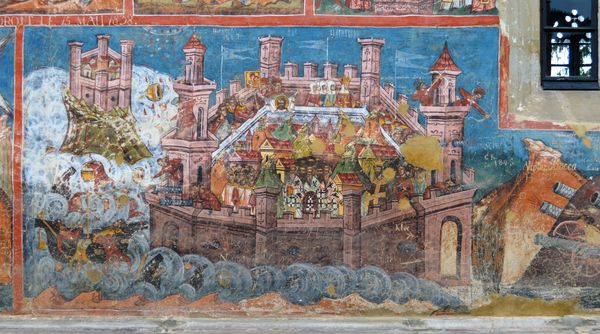
On 29 May 1453, Constantinople fell. For many, it marked the end of the Byzantine world. For Crete, it became the beginning of an extraordinary age of artistic, intellectual and spiritual flourishing.
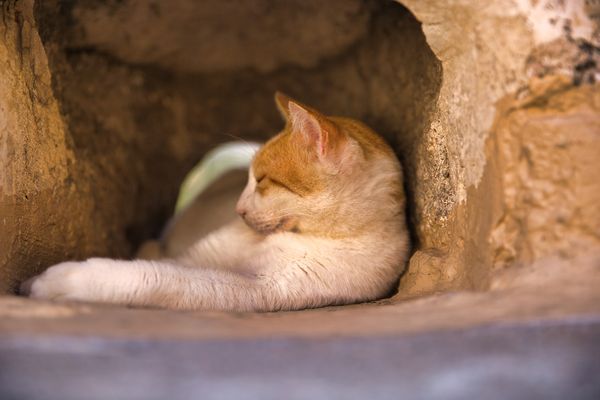
On Crete, civilizations came and went. The Minoans, Mycenaeans, Romans, Venetians and Ottomans left behind palaces, walls, scripts, wars and taxes. The cats watched it all from sun-warmed walls — and stayed.
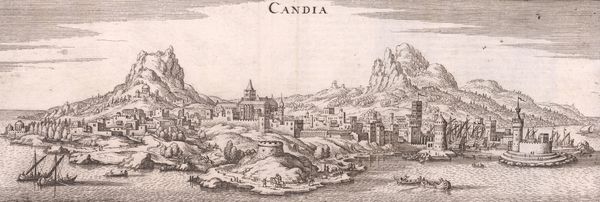
In the summer of 1347, a ship from Constantinople sailed into the port of Chandax. It brought something no one was waiting for: a plague that would cut through medieval Crete, its cities, villages, ports, wills, and religious imagination.