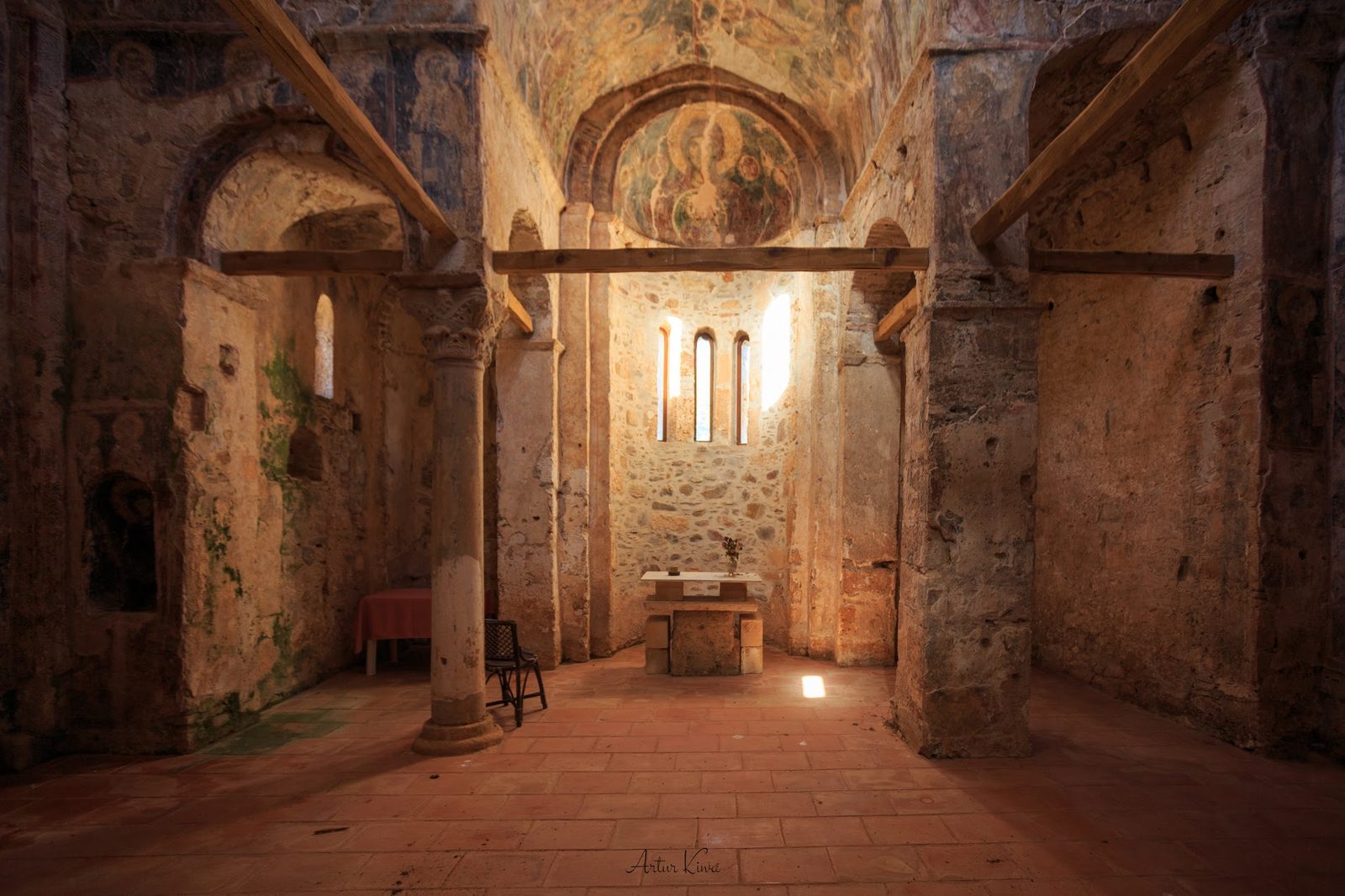
The Stranger. Eight Foundations That Left Their Mark on Crete
The story of a saint who did not build churches and did not perform miracles. He built communities that survived for a thousand years.
Read
Field notes and essays on the churches of Crete: their frescoes, painters, inscriptions and the people around them.
Tag: Crete · clear filter
The story of a saint who did not build churches and did not perform miracles. He built communities that survived for a thousand years.
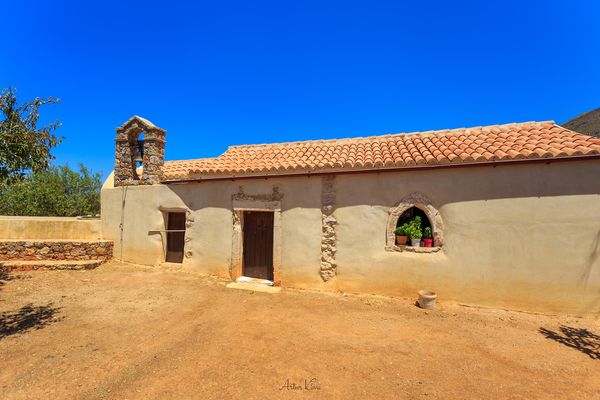
For nearly a hundred years, sailors, merchants and officials carved their names into the plaster of this church. Sixty-six inscriptions between 1514 and 1608. A document of movement, not of piety.
In the catalogue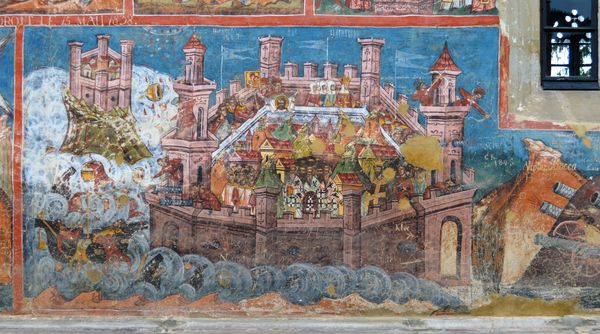
On 29 May 1453, Constantinople fell. For many, it marked the end of the Byzantine world. For Crete, it became the beginning of an extraordinary age of artistic, intellectual and spiritual flourishing.
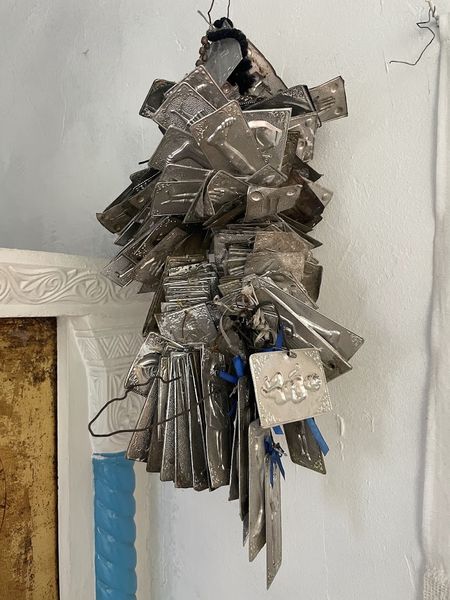
In forgotten chapels of Crete, beside icons and candles, hang silver plaques, children’s shoes, crutches and walking sticks. These are not decorations. They are material traces of requests, fears, gratitude and hope — small application forms addressed to heaven.
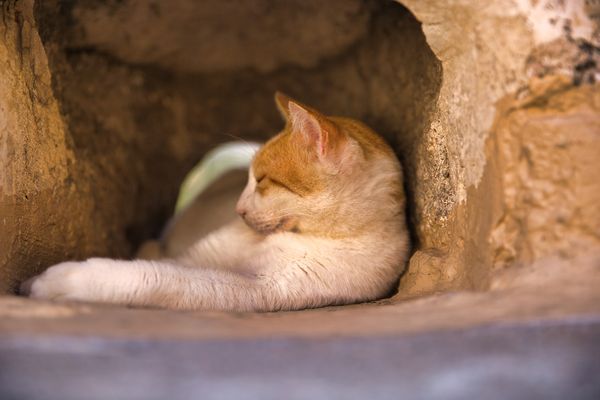
On Crete, civilizations came and went. The Minoans, Mycenaeans, Romans, Venetians and Ottomans left behind palaces, walls, scripts, wars and taxes. The cats watched it all from sun-warmed walls — and stayed.
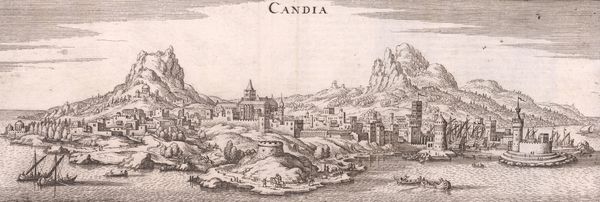
In the summer of 1347, a ship from Constantinople sailed into the port of Chandax. It brought something no one was waiting for: a plague that would cut through medieval Crete, its cities, villages, ports, wills, and religious imagination.
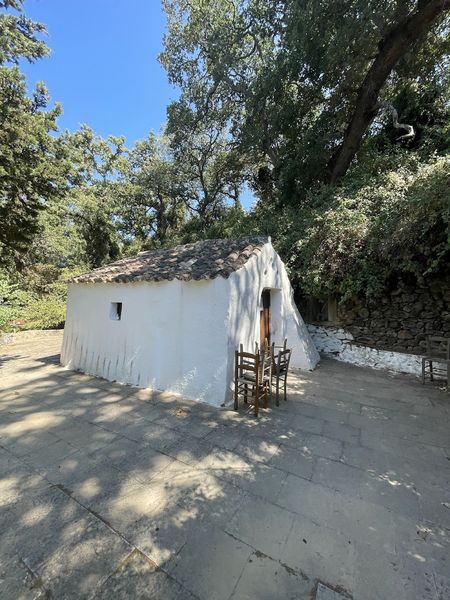
At the edge of an oak forest near Drakona stands a church so small that it would be easy to take it for an unremarkable roadside chapel. And yet, in its faded frescoes, a rare story of Saint Stephen, the first martyr of Christianity, has survived — together with a trace of a world in which Byzantine Crete met the West.
In the catalogue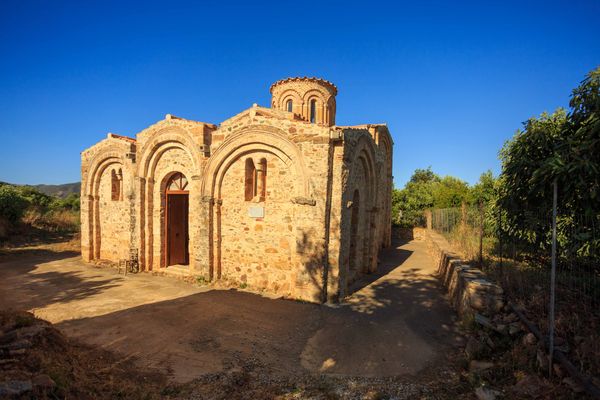
Amid the citrus groves of the Chania plain stands a church that does not announce itself from a distance. You need to know what you are looking for. It is worth the effort — beneath its floor lie children, on its walls lives John the Stranger, and the dedication to the Life-Giving Spring carries a weight here that it carries nowhere else.
In the catalogue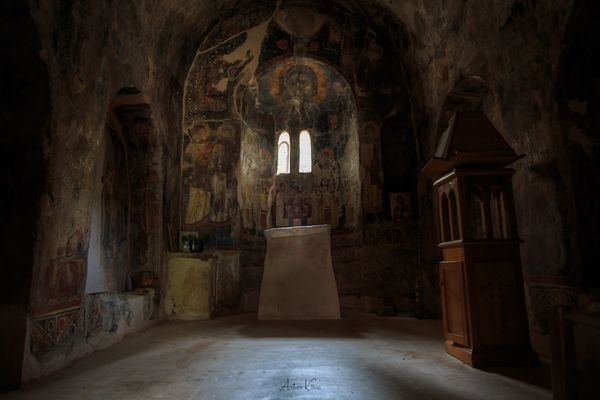
On the edge of a mountain village near Chania stands a small church that is easy to miss. And yet its frescoes are not merely decoration. They lead the visitor through a story of light, death, repentance and hope.
In the catalogue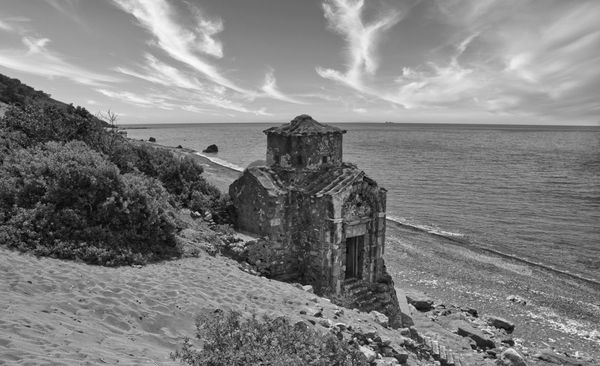
It all begins with a grain ship, an autumn storm, and a prisoner who knew more about the sea than the captain. Acts of the Apostles 27 is one of the most precise accounts of ancient seafaring to have survived to our time. Crete appears in it as an incidental backdrop — not a destination. And yet a thousand years later a wandering monk builds a church on a Cretan beach in honour of that prisoner. Between those two moments lies a question to which scholarship has no definitive answer.
In the catalogue