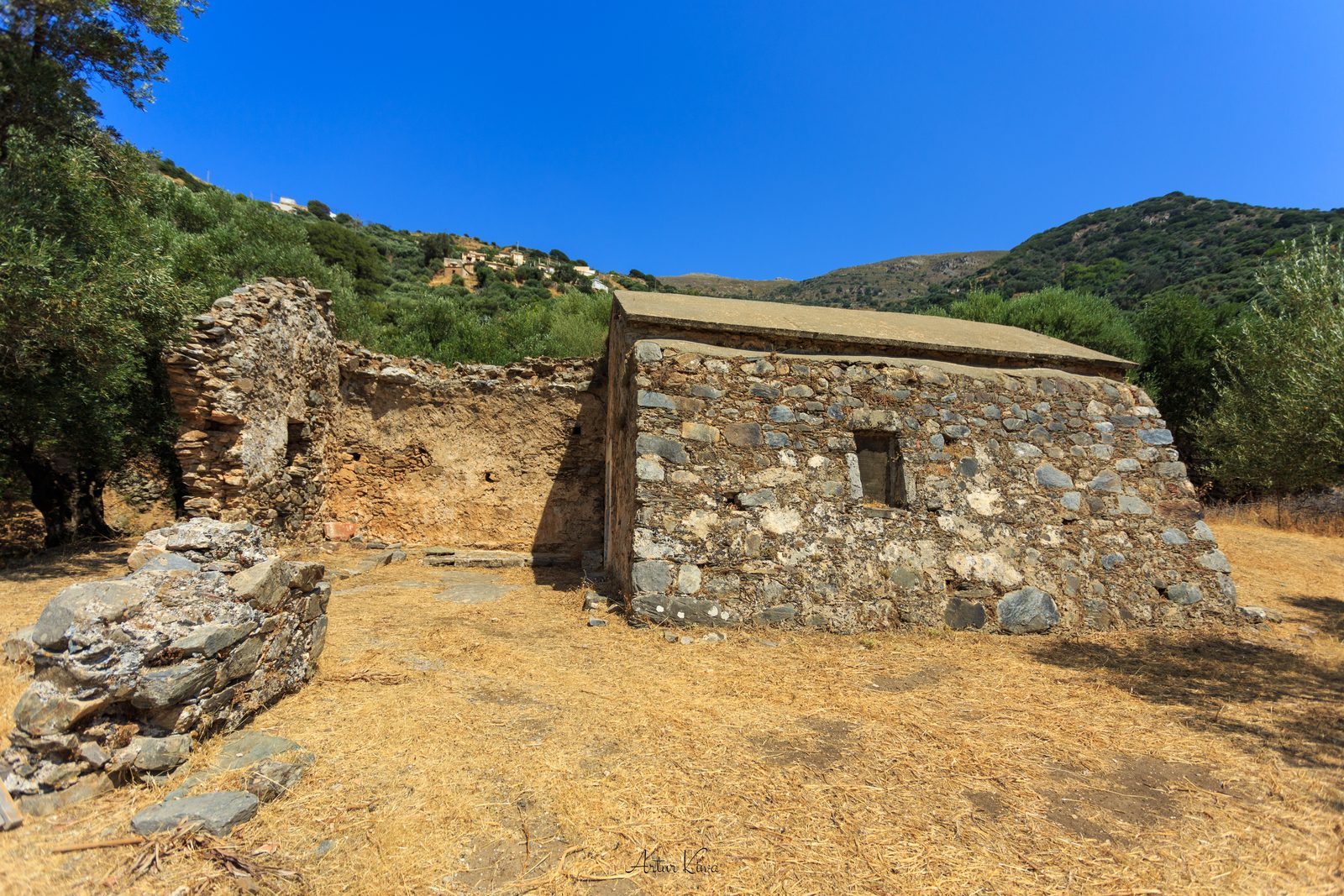
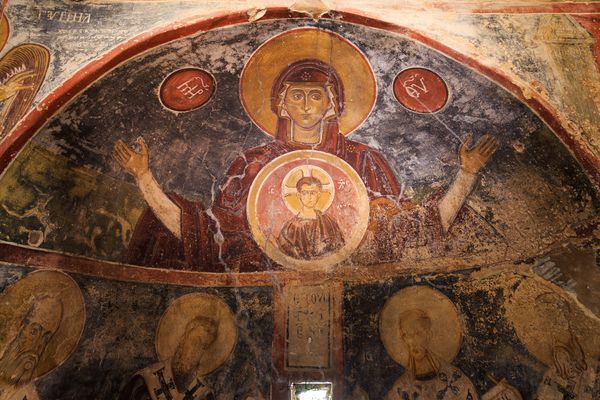
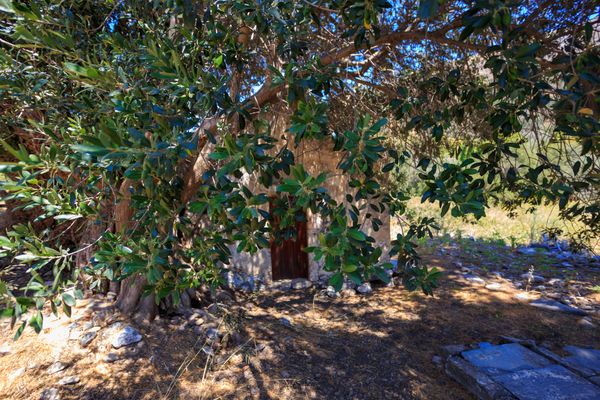
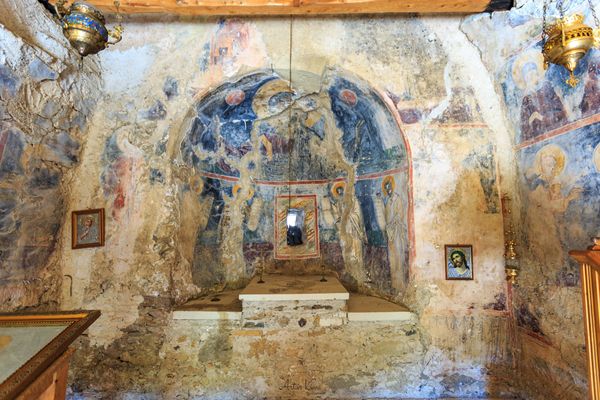
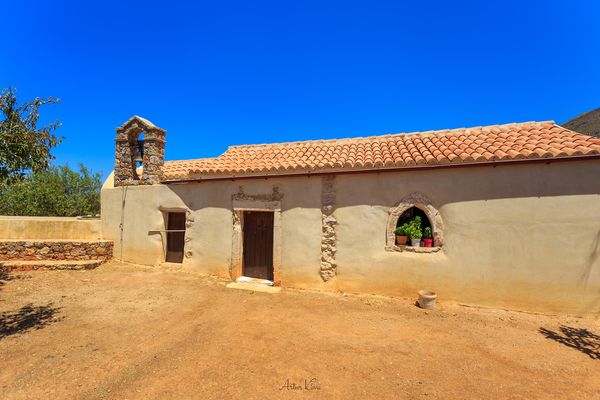
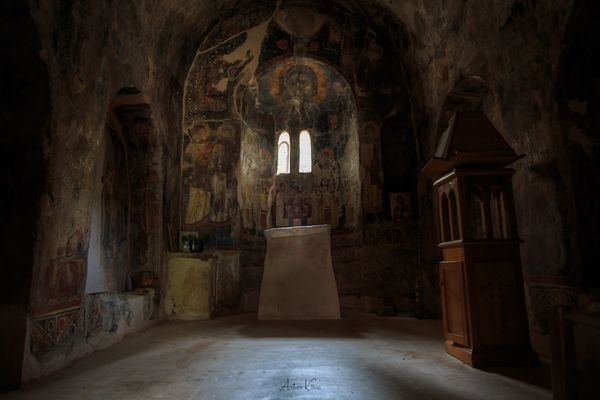
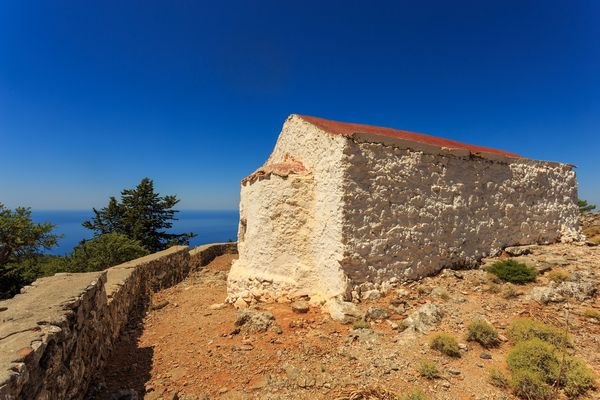
Half a century before Pagomenos, someone was already painting here — no name, no fame, working for a monk who just wanted his own little church. I waited ten years to see it with my own eyes.
Hidden in the undergrowth, as if it still had something to hide. In the first half of the 14th century, two painters left their signature here. It took seven centuries for the content of that inscription to see the light of day again.
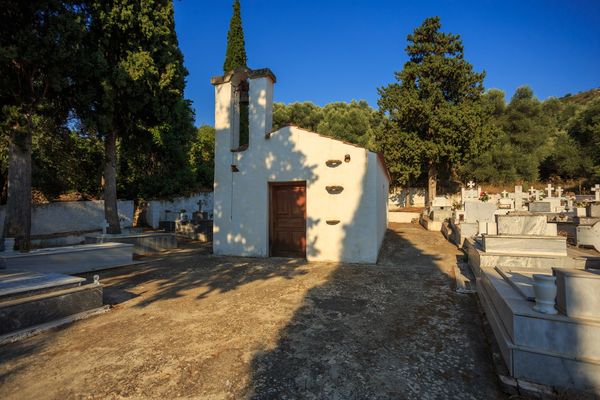
Just a dozen or so metres from my bed, the little church of Agios Athanasios has stood there for years — with hell labelled like a road sign, sinners bitten by snakes, and Ossia Maria, after whom the Samaria Gorge takes its name.
For nearly a hundred years, sailors, merchants and officials carved their names into the plaster of this church. Sixty-six inscriptions between 1514 and 1608. A document of movement, not of piety.
In 1327, four families from a mountain village in Selino built a church, hired a painter, and carved into stone a sentence no one before them had dared to write. Seven hundred years later, their faces are still on the wall.
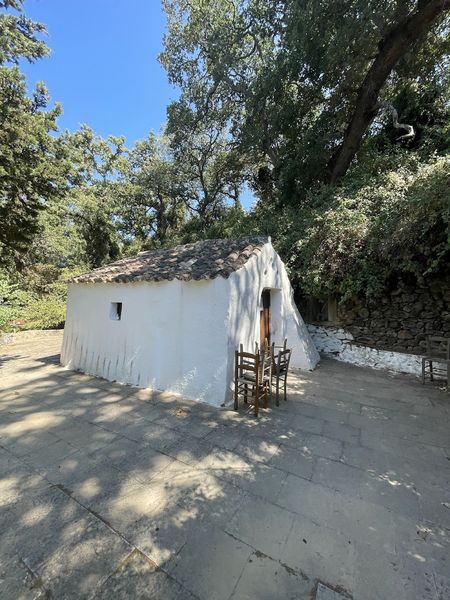
At the edge of an oak forest near Drakona stands a church so small that it would be easy to take it for an unremarkable roadside chapel. And yet, in its faded frescoes, a rare story of Saint Stephen, the first martyr of Christianity, has survived — together with a trace of a world in which Byzantine Crete met the West.
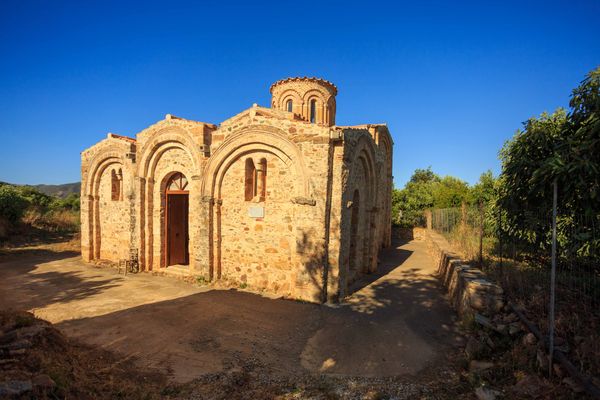
Amid the citrus groves of the Chania plain stands a church that does not announce itself from a distance. You need to know what you are looking for. It is worth the effort — beneath its floor lie children, on its walls lives John the Stranger, and the dedication to the Life-Giving Spring carries a weight here that it carries nowhere else.
On the edge of a mountain village near Chania stands a small church that is easy to miss. And yet its frescoes are not merely decoration. They lead the visitor through a story of light, death, repentance and hope.
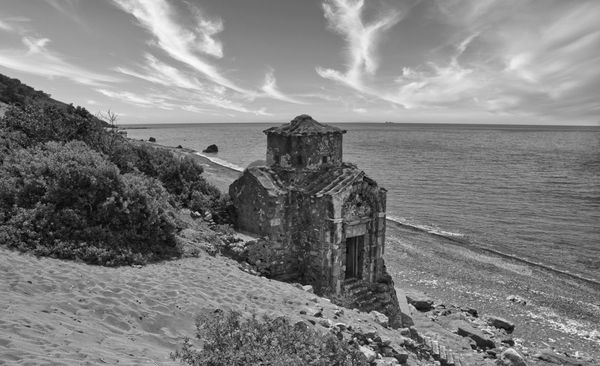
It all begins with a grain ship, an autumn storm, and a prisoner who knew more about the sea than the captain. Acts of the Apostles 27 is one of the most precise accounts of ancient seafaring to have survived to our time. Crete appears in it as an incidental backdrop — not a destination. And yet a thousand years later a wandering monk builds a church on a Cretan beach in honour of that prisoner. Between those two moments lies a question to which scholarship has no definitive answer.
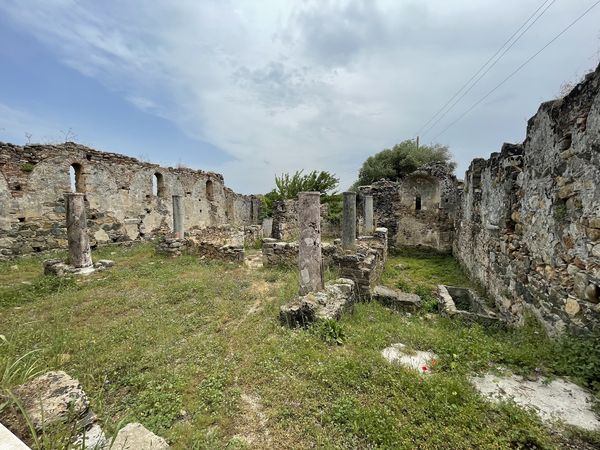
Kilkanaście kilometrów od Chanii, przy drodze, której większość samochodów nie zna, stoją mury z czerwonymi pasami cegły i kolumny z marmuru, którego na Krecie nie ma. To nie są ruiny kościółka. To ruiny katedry biskupiej, centrum chrześcijaństwa całego zachodniego krańca wyspy. Stały tu przez ponad tysiąc lat. Teraz giną powoli, bez tablicy, bez ogrodzenia, bez nikogo.
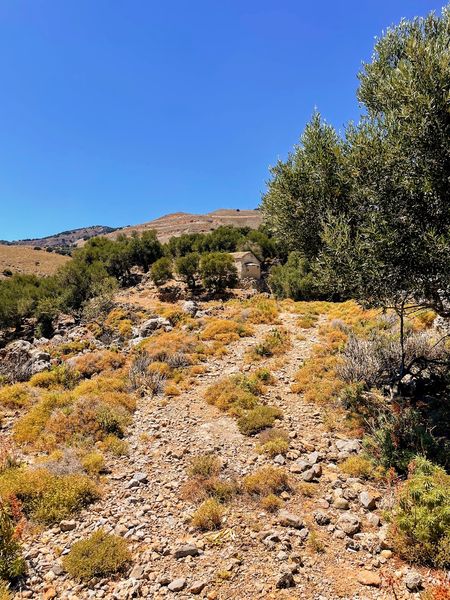
The Church of Saint George in Komitades is a 14th-century sanctuary in the Sfakia region of Crete, known for its well-preserved frescoes painted by Ioannis Pagomenos and for a surviving foundation inscription dated to 1313–1314. Located far from main roads, in a stark mountain landscape, it stands as a valuable testimony to local piety, communal patronage, and the iconographic programme of the Venetian period.